For the members of the rabbinical delegation from the United States, it was a heart-wrenching evening that they will never forget.
Any description of this evening, even the best, will pale in comparison to the feeling they experienced, because it touched the deepest depths of the heart, and its impression will resonate with them for a long time to come.
On the outskirts of Bnei Brak, on a cold and clear winter night, a heavy silence reigned on a balcony illuminated by a soft orange light. The location, geographically, is very close to the home that is being built for Ganzach Kiddush Hashem, and it was one of the considerations in this event’s location.
Around an elegantly arranged table, the members of the distinguished delegation, which included a dozen rabbis from important communities and yeshiva heads in the United States, read the material, listened to the lectures, viewed the artifacts, and were impressed firsthand by Ganzach Kiddush Hashem’s work of preservation and commemoration.
The heads of Ganzach Kiddush Hashem sat together with the important rabbis, community leaders, and Torah scholars from various regions of the United States – including Rabbi Aryeh Leibowitz, Rabbi Daniel Stein, Rabbi Daniel Feldman, Rabbi Eli Belizon, Rabbi Ephraim Polakoff, Rabbi Yitzchak Reiss, Rabbi Yona Steinmetz, Rabbi Lawrence (Larry) Rothwax, Rabbi Shmuel Marcus and Rabbi Shai Schechter. The Ganzach Kiddush Hashem heads who were present were: Chairman of the Presidency Council, Rabbi Israel Meir Lau; Director, Rabbi Zvi Skulski; member of the Presidency Council, Rabbi Moshe Chaim Lau; renowned senior lecturer, Rabbi Yisrael Goldwasser; author and content editor, Rabbi Yaakov Rosenfeld; and the management team, along with Rabbi Avraham Mordechai Kaminer, Rabbi Baruch Helfgott, Rabbi Aryeh Frankel, and more.
The dinner, which brought hearts closer and removed barriers, opened the series of discussions, with the main topic being how to engage additional audiences in the project of commemorating Jewish history, with an emphasis on the story of the heroism of the Holocaust victims and survivors.
The words of blessing were heard with respect and appreciation by the Rabbi Asher Weiss, the renowned rabbi and posek (rabbinical decisor), founder and head of the “Darchei Torah” beit midrash (study hall) and head of the “Darchei Hora’ah” beit din (rabbinical court), son of precious Holocaust survivors, a cornerstone of Torah and chassidic institutions in the United States and Israel. Rabbi Weiss’ words were delivered in English and left a strong impression.
The Mayor of Bnei Brak, Rabbi Hanoch Seibert, honoured the event with his participation along with his team of assistants and members of his office. In his remarks, he moved the audience with memories of the home of his father, Rabbi Shaul Dov Seibert, born in Krakow and a survivor of the Bochnia camp, and the home of his grandfather, the great and righteous chassid, Rabbi Leibel Kutner z”l. He described in moving words the character of the chassid, a Holocaust survivor who never complained and always “held the pole which held up the building.” In his remarks, he explained to those present the plan for establishing the memorial centre and the role of the municipal authority in this initiative.
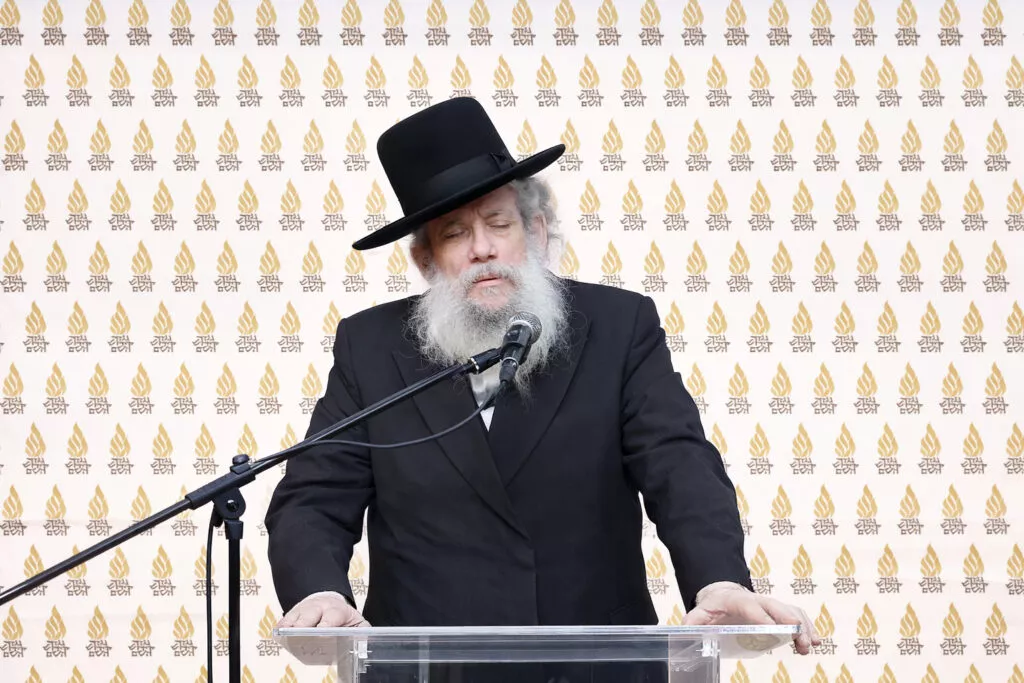
Bnei Brak Mayor, Rabbi Hanoch Seibert
The Chief Rabbi, Rabbi Israel Meir Lau, Chairman of the Presidency Council of Ganzach Kiddush Hashem, was received with excitement and applause. His impressive appearance and moving words captivated every heart. The revered rabbi, a survivor of the Holocaust, is a testament to generations past and present, and to the years of suffering experienced by the Jewish People in those days. The Piotrkow Trybunalski Ghetto, the first ghetto in occupied Poland, still stands before the rabbi’s eyes; the ghetto from which he was taken to the labour camp in the city of Częstochowa, his last stop before the Buchenwald concentration camp.
The rabbi’s voice trembled as he told those present about his experience in Australia when he first visited it forty years ago. “On Shabbat night I was walking to a hotel, when suddenly a gentile’s head popped out of the window of a luxury car. The brazen antisemite’s question still shakes me to this day: ‘Have you paid for the gas yet?!’“…
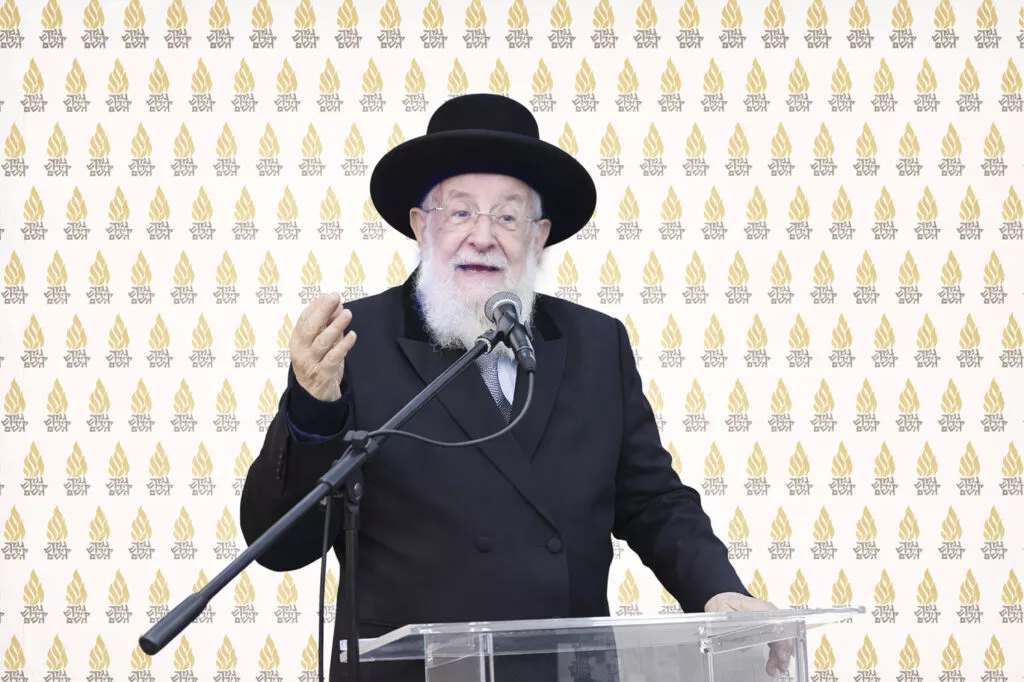
Chief Rabbi Israel Meir Lau, Chairman of the Presidency Council of Ganzach Kiddush Hashem
The role of rabbis and leaders, especially in the United States and Europe, is to create meaningful tools that will help in the fight against antisemitism. This house that is being built here, thundered the voice of the revered rabbi, one of the “Children of Buchenwald,” will serve as a beacon for all the people of the world, Jews and non-Jews, who will come to learn about history and also about what hatred and antisemitism can do to the world if they are not stopped at their start.
Also speaking were Mr. Avi Ganon, Deputy Director General of the Ministry of Foreign Affairs; former Director General of the Ministry of Education, Ms. Dalit Stauber; heads of the “Shofar” project to commemorate Jewish history, which is a high-level link to the establishment of the new center; and Rabbi Yisrael Goldwasser, who gave an emotional speech before the virtual reality presentation, which tells through spectacular technlology, what we have been commemorating for the past sixty years. These were, therefore, long hours full of satisfaction and a sense of responsibility in which “Shevet Achim Gam Yachad” (brethren sit together), people with opinions from a variety of denominations and circles sat, with a common goal and a vision that G-d willing will be brought to fruition.
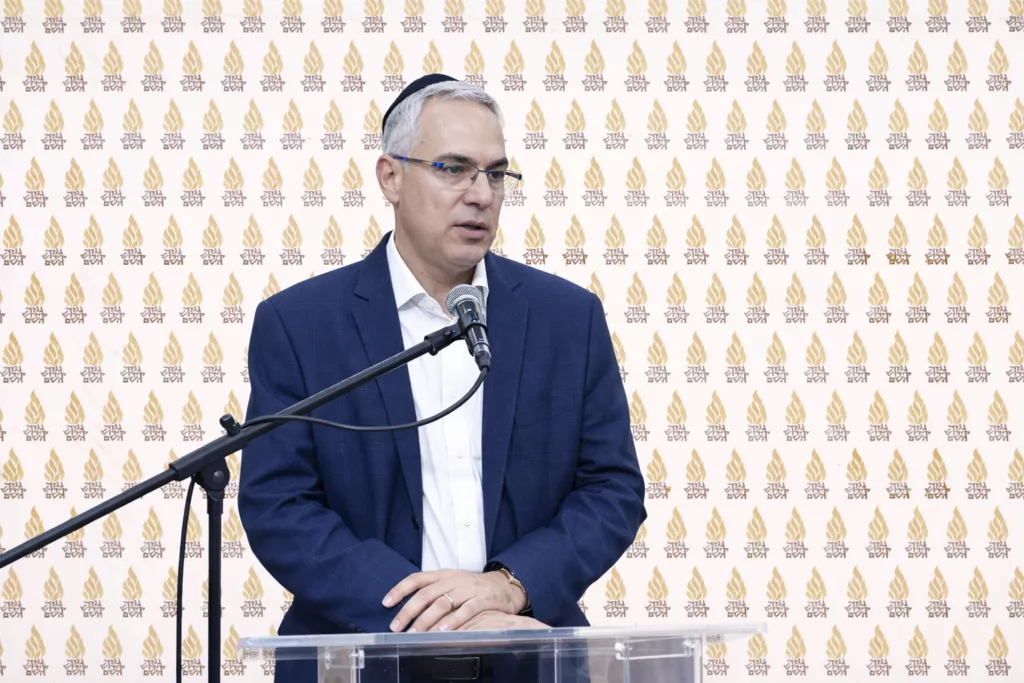
Mr. Avi Ganon, Deputy Director General of the Ministry of Foreign Affairs