80 Years Since Studies Began in Lidingo
Hundreds of boys studied from the holy books of the Holocaust survivors
By: Yaakov Rosenfeld
In the fall of 5706 (1945), classes began at the Lidingo school. Eighty years have passed since then, and anyone who wants to gain some idea and understanding of the extent of the success of an educational institution under the most difficult conditions imaginable, thanks to the dedication and pure Jewish character traits of its administrators, should learn a little about this school; the educators who worked there and its students, orphaned Holocaust survivors from all over Europe, for whom Lidingo was a home after they lost everything they had.
Lidingo, the magical, beautiful and peaceful island, is located in a suburb of Stockholm, and today it is considered a prestigious and desirable place, but eighty years ago this island was a home and institution for orphaned Holocaust survivors from Poland and Hungary, girls from chassidic homes who rebuilt their lives after the devastation they experienced during the Holocaust.
Sweden, the neutral country, hosted the survivors, who were mostly weak and sick, after the Holocaust. The charedi (ultra-Orthodox) orphans, whom Swedish women showered with warmth and love, required a lot of willpower to reject, albeit politely, the offers of adoption these kind-hearted women presented to them. Rather, the girls chose to continue in the path of their ancestors, and this was not easy. The house established in Lidingo by dear Jews who managed to overcome the bureaucracy and the determined opposition of Reform Judaism, which was the one that dominated the Jewish community in Sweden at the time, was a warm home for hundreds of Holocaust survivor girls, where they grew up and flourished, and where they also studied and were educated. They emerged from it prepared for life, and thus were able to establish homes loyla to traditional Judaism, and many of them even engaged in teaching and education.
Not much is known today about Lidingo, the magical island that saved so many lives in Israel, but Ganzach Kiddush Hashem has been teaching about Lidingo for years, and it will continue, as there is a plan in place for an exhibition that will be presented to Bais Yaakov students from all classes and denominations, who will learn about Holocaust survivors their age, how they built themselves and their future, and what they experienced on the long road until they were privileged to illuminate their world and the worlds they built.
Ganzach Kiddush Hashem, Bnei Brak, exactly eighty years after the opening of the holy institution in Lidingo.
Starting a week before Chanukah and continuing through the coming weeks, when Talmud Torah and yeshiva students visit Ganzach Kiddush Hashem for educational and research tours (during the week of Chanukah, many hundreds of students participated in this activity), these excited students are treated to a unique experience:
They learn from ancient holy books from which the survivors studied in Lidingo.
The books, which are in the archives of Ganzach Kiddush Hashem and have been professionally preserved for years, seem to have eagerly awaited their redemption from desolation and loneliness, and suddenly, eighty years later, children and youth sit in silence and in awe and listen to the words of mussar (morals) of the Mesilat Yesharim book, which they have already heard from their rabbi in yeshiva and cheder, but the excitement that surrounds them in the face of the wonderful story of the book and those who learned from it adds another meaning to the “explanation of man’s duty in the world” of the Mesilat Yesharim.
Boys who just started putting on tefillin (phylacteries), and listened to lectures about the self-sacrifice for putting on tefillin and fulfilling the commandments of boys and young men their age somewhere in the camps and ghettos, were excited to learn the laws of tefillin precisely from the Kitzur Shulchan Aruch book that the survivors studied from…
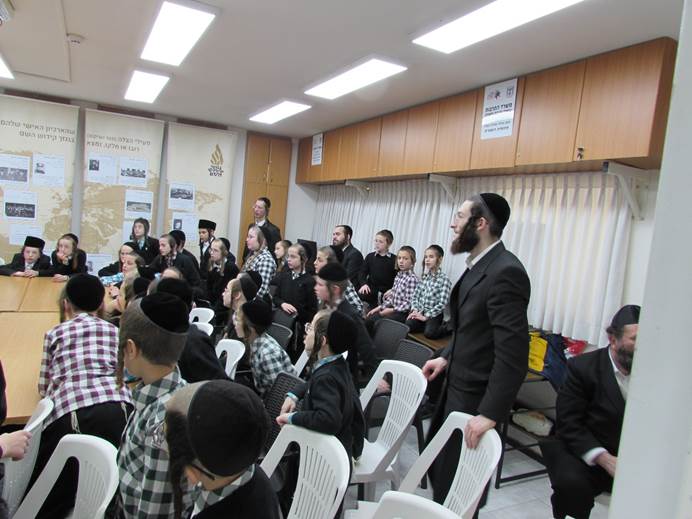
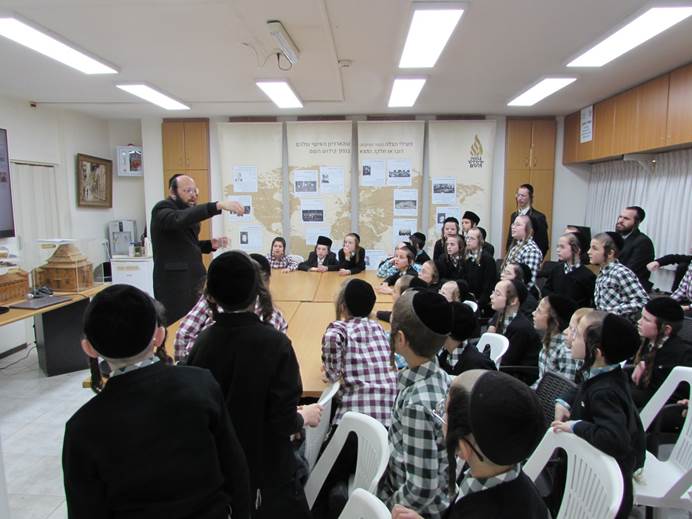
Studying the Torah books of Lidingo… Groups of students at Ganzach Kiddush Hashem, Chanukah 5786 (2025)
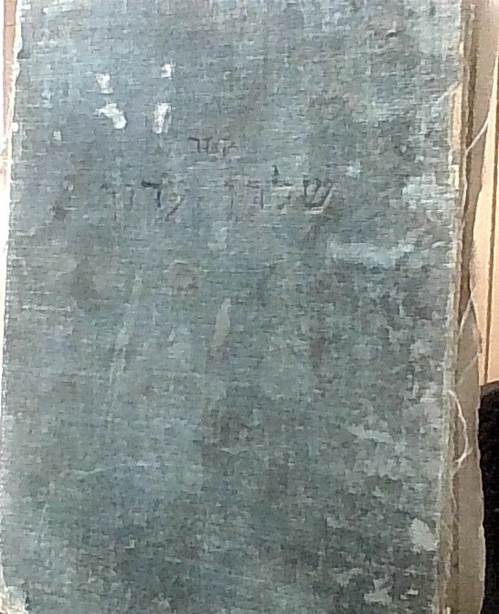
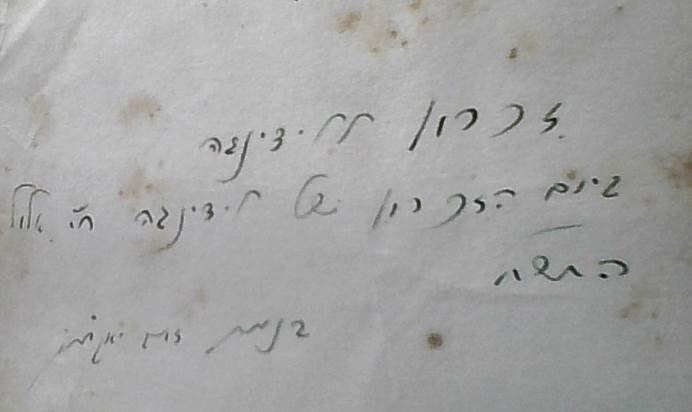
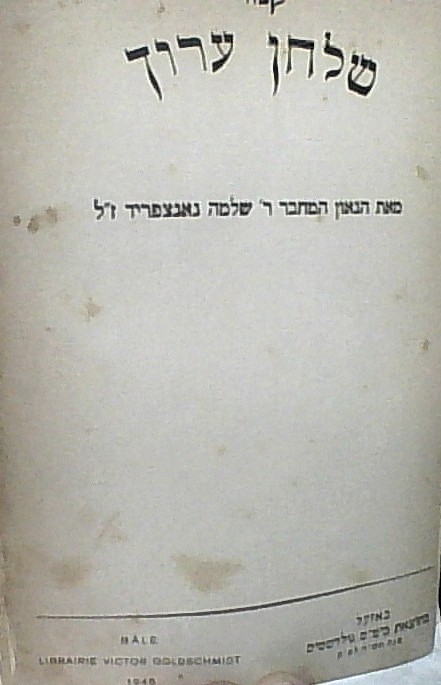
A Kitzur Shulchan Aruch book, “A Memorial to Lidingo,” signed by Rabbi Binyamin Zeev Jacobson (whose wife ran the school).
The book was printed in Basel, in 1945, published by Goldschmidt Trading House