“And G-d Goes Before Them…”
The Piaseczna Rebbe’s words on Parshat (weekly Torah portion) Beshalach, at Shaleshudis (the 3rd Shabbat meal) on Shabbat Shira (the Shabbat before the Tu B’Shvat holiday) 5700/1940, Warsaw Ghetto
By: Yaakov Rosenfeld
It was deep in the winter inside the ghetto, which had been closed for several months.
Not only was the ghetto closed, but breathing was also constricted, stifling. The streets between Nowolipki and Mila had shortened, as if the stone itself had retreated from the people. Old snow had been crushed into dark mud, and wooden carts creaked as they carried what could no longer be saved. Old men sat by the walls, wrapped in coats that had lost their shape, and it was not always clear whether they were waiting for someone or no longer waiting at all.
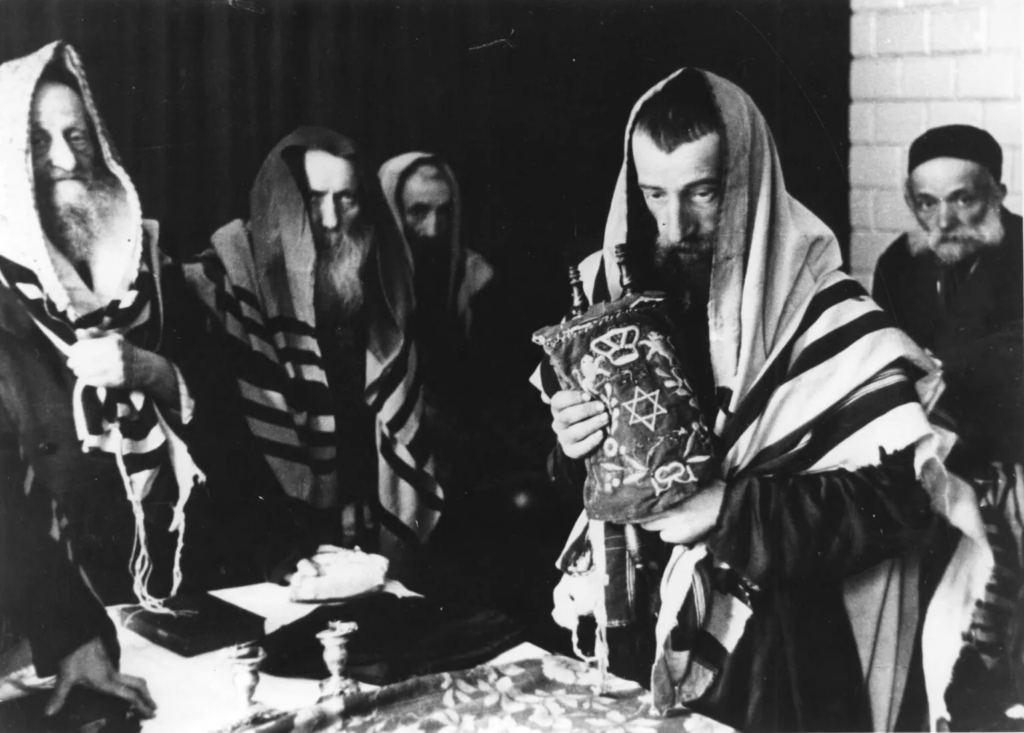
Jews praying in secret in the Warsaw Ghetto
In an apartment without a sign, Jews gathered for the end of Shabbat. It was not a formal gathering. Each one arrived as if by chance, at different times, without knocking twice. The small room smelled of a thin stew made from potato peelings, and of a loaf of black bread cut into thinner slices than usual. Those who had eaten today were silent. Those who had not – as well.
Small candles were lit carefully, as if light were also rationed.
There were no more institutions in the ghetto. No chassidic courts, no yeshivas, no community. There were individuals. People who remembered what Judaism looked like when it was whole, and they tried to hold on to it with empty hands. The Rebbe was their address. Not for their sake, but for their presence. He did not promise salvation, nor did he explain the disaster. He was there, and that was enough for them, to not be left alone.
The heartbroken masses of people had the holy Piaseczna Rebbe. The Rebbe whose personal grief did not overwhelm him or extinguish his spirit. A few months had passed since his wife and son were murdered, and the Rebbe was alive, full of strength and power, showering dews of life on those who were huddled in his shadow, on those who yearned for comfort and strength, and who did not need it then?
At that time, the Rebbe operated a mikvah (ritual bath) with self-sacrifice, and would operate it and send those in need to it, knowing that this could lead to his death, but the Rebbe did not weaken or fear.
And his words of Torah at the time of afternoon prayers were like living water for thirsty souls, and his words healed hearts and revived the people.
The holy Shabbat, Parshat Beshalach, 10 Shvat 5700 (Jan. 20, 1940).
In the company of the tzaddik (righteous man) of Piaseczna, heartbroken Jews sat, waiting for his holy words to come out.
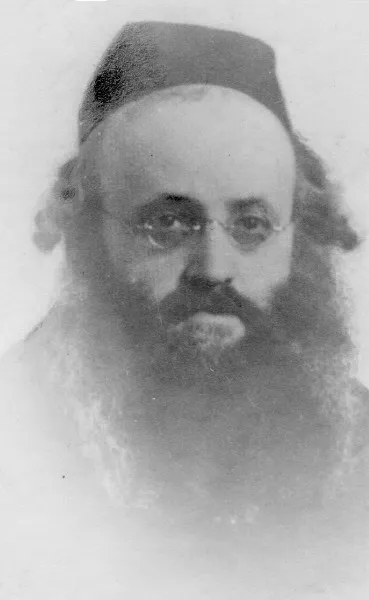
The Piaseczna Rebbe, Rabbi Kalonymous Kalmish Shapira z”l
Then, the Rebbe’s pleasant voice spread through the darkness of the room, and his words were heard, clear, sharp, pleasant, and sweet:
Here is what the Torah tells us in our parsha, about all the events of our ancestors when they left Egypt.
So G-d led the people around by way of the desert to the Reed Sea, and the children of Israel were armed when they went up out of Egypt… Moses took Joseph’s bones with him… They traveled from Succoth, and they encamped in Etham… And G-d goes before them… (Exodus 13:18-21)
It seems difficult. The Torah describes all the events in the past tense, and G-d led, and Moses took, and they journeyed, and they camped… and suddenly the Torah switches to speaking in the present tense. And G-d goes before them. Why doesn’t it say that G-d went before them?
But the interpretation is clear; they went, traveled, camped, etc., everything belongs to the past, but G-d goes before them, it is in the present because the G-d always walks with us! This is a given that has not changed and is not going to change. As the Sages say, wherever it is written “and G-d” the meaning is Him and His court! Even when His court goes with Him, that is, when the measure of justice goes with Him and punishes us, G-d goes before us! He goes before us by day, when it goes well, and He also goes before us by night, in the Amud Ha’Esh (pillar of fire), to give us light when it is difficult!
“And G-d goes before them.”
The words were not spoken as a sermon. They were spoken as reality. The people in the room were not in the desert, but they knew very well what a road with no end was. They knew what it meant to walk day by day without knowing who would remain and who would disappear. The Rebbe did not ease the pain. He only said: If God walks before us – it is not an empty walk.
At night, when he returned to his apartment, the Rebbe sat and wrote. With a trembling hand, not just from the cold. He knew that there might be no one who would read what he was writing. And yet he wrote. Not to publish, but to deposit. Torah spoken in the darkness, so that it would not be lost with him.
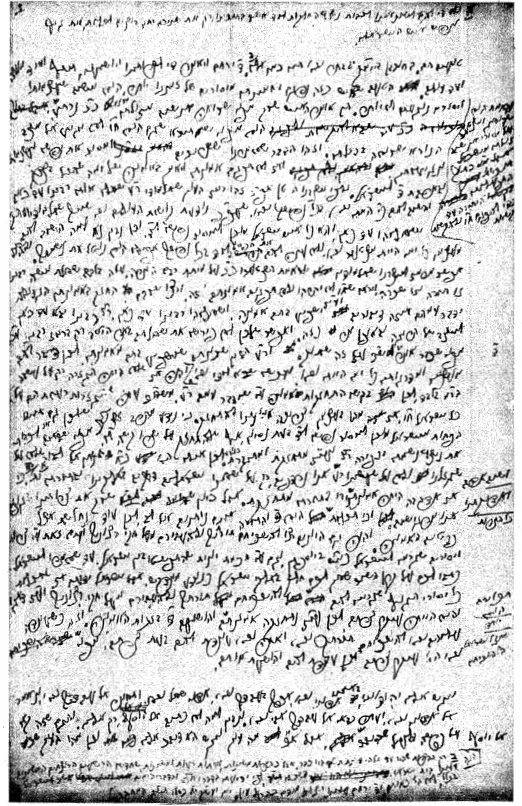
A handwritten page from the manuscript of Aish Kodesh by the Piaseczna Rebbe (the Shabbat of Chanuka 5702/1941)
The Torah thought is found in the Rebbe’s handwriting in the Herzog Academic College edition, from the manuscript in the Ringelblum Archive, Jewish Historical Institute in Warsaw. “Drashot MiShnot Ze’em,” Rabbi Kalonymous Kalmish Shapira.