Chaim Meirim – The Yahrzeit (Anniversary of Passing) of the Vizhnitzer Rebbe, Rabbi Chaim Meir Hager z”l
In memory of the Vizhnitzer Rebbe, the holy Rabbi Chaim Meir Hager z”l, who passed away on the 9th of Nisan – A Heart-Wrenching Description – The Last Passover with the Vizhnitzer Chassidim in Kitov
By: Yaakov Rosenfeld
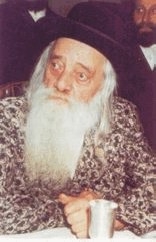
On Passover, Vizhnitz burned like fire. All year round, Vizhnitz was characterized by the warmth of a holy fire, the Shabbats of Vizhnitz, the holidays, and even just every day. But Passover surpassed them all.
The holy Rabbi Chaim Meir Hager, whose yahrzeit falls on the 9th of Nissan, is the exhalted tzaddik (righteous man) who continued the Vizhnitz path after the war and established it in the quantity and quality that it is today in all corners of the earth. Much has been written about his leadership during the Passover holiday, which left a mark on time and generations. His soul seemed to be carved from the holiness of the Passover holiday.
Rabbi Chaim Meir suffered greatly during the war, moving and wandering, and with great suffering, and even more painfully felt the destruction of the generation and did great things and sacrifices to save many Jews.
Below are letters from his holy manuscript, from the Holocaust period, as well as what he wrote over the years about it, some of which were written in Yiddish and translated by us.
At the height of the war, when he himself was in danger, he did not spare himself and did everything he could to save his relatives and other Jews. He would hide young people in his home whom he affectionately called “Tunikes” (“Tu” was the acronym for “Tamir V’ne’elam” – “concealed and disappeared”…) and risked himself for them.
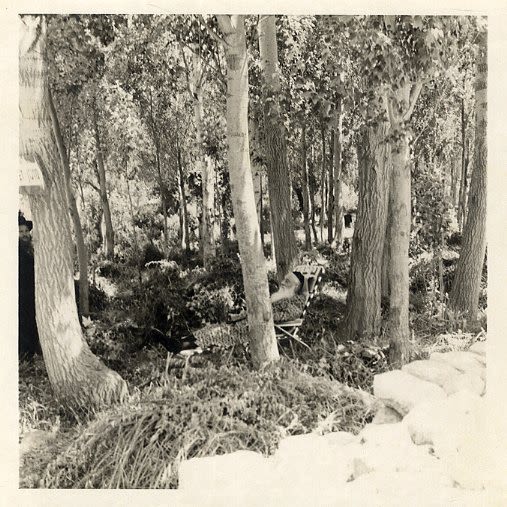
A vacation in the forest near the end of his life
Below is a letter he wrote to save his brother, and in the margins he signed it with a hint of danger, “chaim meirim” – “An illuminated life.” He then signed other letters with this hint.
Please, please, please have mercy and work with dedication to save our brother and his family from the dust of the earth. This concerns my soul. Do not forget that this concerns the life of our father, our shepherd, may G-d bless him. His reward will not be forgotten forever. There is no end to his reward. He will not rest or be quiet, and G-d will be with him. If he succeeds in being a messenger to save them, he will have enjoyment and pride for the rest of his life.
I bless you with a chaim meirim.
As we reflect with sorrow on the Jews of Vizhnitz and its daughters, the holy communities who gave their lives in sanctification of the Name of G-d, we raise with sacred reverence the memory of the one who continued the leadership of the dynasty, and established it after the Holocaust, the revered leader, one the greatest righteous of the generation, our Rabbi Chaim Meir Hager of Vizhnitz.
On the yahrzeit of the great Rabbi Chaim Meir of Vizhnitz z”l, who G-d saved from the Holocaust to revive a a great nation and establish Torah and chassidic institutions in the Holy Land, in the United States, and in Europe, we at Ganzach Kiddush Hashem go back eighty years in the tunnel of time and remember the years in which the holy Rebbe of Vizhnitz worked with all his might to revive the dry bones and breathe dews of hope among the She’erit HaPleita (survivors). The path of the holy Rebbe was not easy, nor was it strewn with roses. He single-handedly established the first chassidic neighbourhood, and since his intention was for the sake of heaven, the Vizhnitz neighbourhood became a model for countless neighbourhoods and towns that were built after the Holocaust. The holy Rebbe established Torah and chassidic institutions for the She’erit HaPleita, and within a few years his holy court and its institutions were a beacon of light for thousands of chassidim and people of action throughout the world.
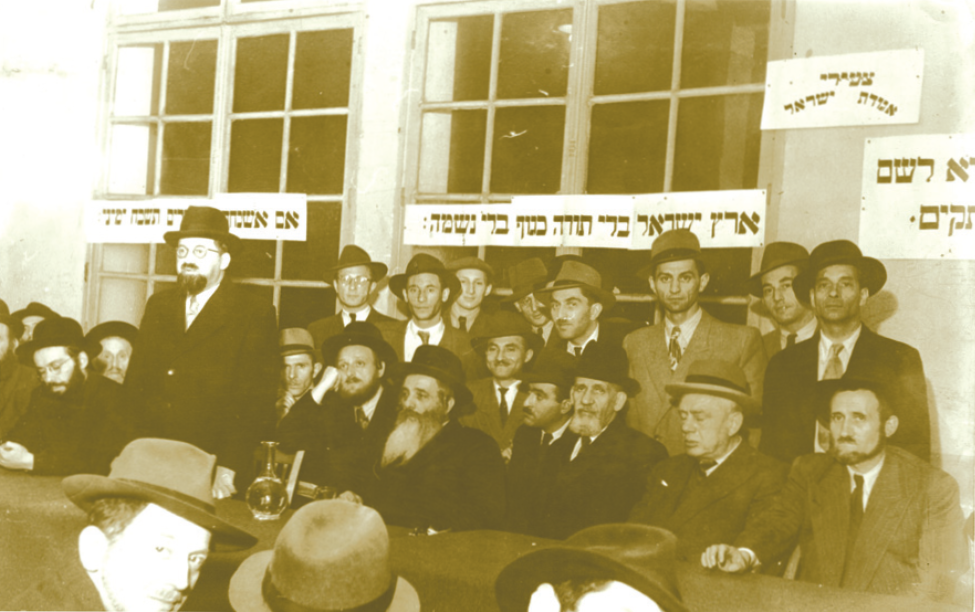
The Vizhitzer Rebbe z”l, known as the Imrei Chaim, with Holocaust survivors on a visit to Paris
The Imrei Chaim – he is the man who “saw the the affliction by the rod of His wrath” (Lamentations 3:1). He grew up and lived in the glorious kingdom of Vizhnitz. He was a Rebbe, a rabbi and a yeshiva head and raised thousands of students and chassidic worshipers of G-d in the flame of holy fire. Most of his students and chassidim, like most of his holy ancestral house, were killed in the Holocaust and the holy Rebbe kept his pain and longing in his heart until his last day, but outwardly his leadership was full of strength and power and streams of joy flowed around him.
Thus he was blessed to build a new world of Torah and Chassidism, a new generation that does not shame the fathers who sanctified the Name of G-d with his nobility, holiness and chassidism. Today Vizhnitz has tens of thousands of chassidic followers throughout the world; warm and passionate chassidim whose tune of Rabbi Chaim Meir emanates from their homes and whose souls are illuminated by the light of his Torah and holiness.
We find an echo of the Rebbe’s longing for the glory of his ancestral home in his letters – letters that have been preserved and published in various places, an example of which is:
Hot Tears
Thank G-d, everything is fine with me. As I sit alone in my room and look at the picture of the Vizhnitz court, hot tears flow from my eyes. I miss our glorious past very much, oy v’avoy! Where are my parents and all our family members! I have no one to talk to about the glory of Vizhnitz, because these are the remnants that remain of the descendants of our holy father, rabbi, and teacher z”l, scattered throughout the corners of the earth, and I am forced to talk to myself and evoke memories of what once was. What can be said and what will we said, the righteous G-d…
(From a letter sent to the son of his brother overseas)
The Time Demands Swift Action
My beloved brother, the righteous rabbi and teacher,
We thank G-d what we are all alive.
Know, my beloved, that besides the fact that the danger of killing and cruelty has passed, thank G-d, the economic situation of the survivors has not improved at all. The disgrace of hunger and destruction is hanging over us. The people of Pest need great mercy and when God has mercy on them and they remain alive, then only will they need support and help, especially the pious. As is known, the directors of the support institutions are mostly the “free” and the pious are the last of the last to be brought up.
The situation is terrible. From Transnistria I receive letters that are alarming and heart-wrenching, because there are still fifteen thousand people left there and their situation has worsened than it was. Because sending support there is more dangerous than ever, and for this reason the messenger’s salary has increased by half and the main thing is that there is nothing to send them.
The time demands swift action. Please see to it that the hearts of our Jewish brethren in Switzerland and America…
I Have No One to Pour Out My Bitter Heart To
Our holy father, used to write a letter to the children before Passover. I also want to write a letter to the family, my father’s grandchildren, but to our regret, there are very few to whom to write. Hitler – may his name be blotted out – robbed us of the most beautiful, so I will write to you, my dear niece, and I imagine that I am writing to the entire family, may their souls be bound in the bonds of life.
I sit locked in the house; with tears of blood, I am longing for our glorious past when our holy father sat in the Seder with only children around him, and with his tearful eyes he would look at us and answer our questions, while our mother z”l would stand on the threshold of the door, full of devotion and exaltation, and would draw pleasure, and pray to G-d. Today we are orphans. The holy monarchy has been destroyed.
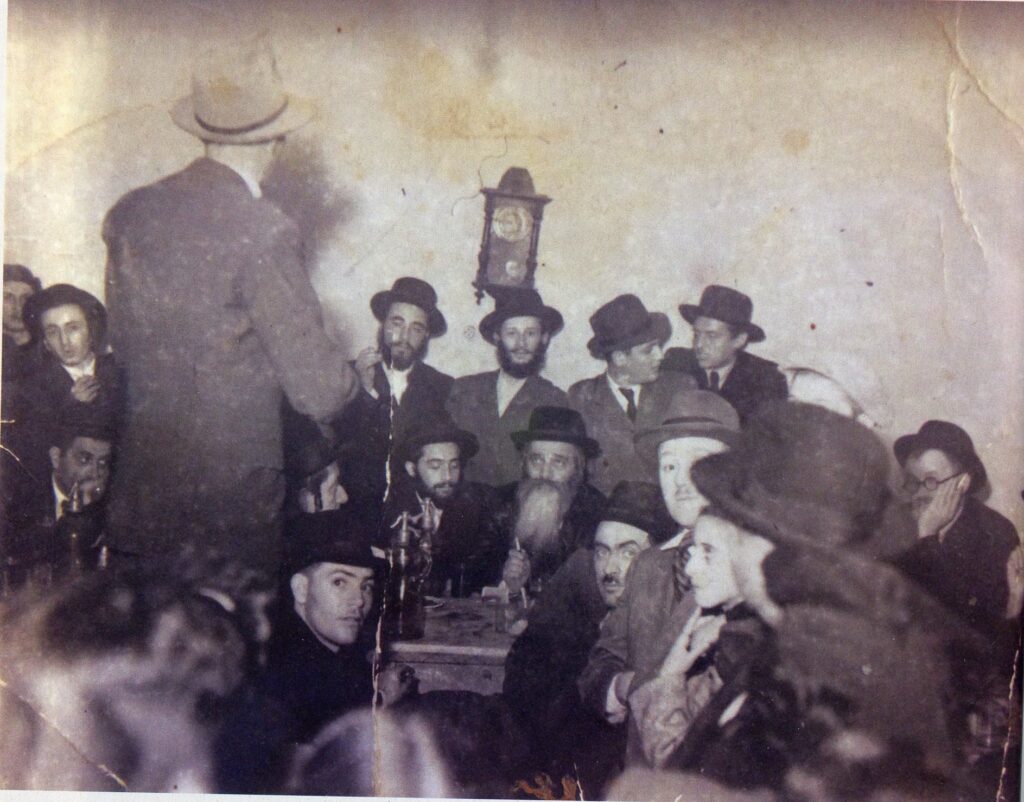
The Rebbe, the Imrei Chaim of Vizhnitz, participating in the wedding of a Holocaust survivor couple in Klausenberg
I have almost no one to pour out my bitter heart to. Who will understand me? Most young people don’t even know what Vizhnitz is, they’ve never seen it… May G-d have mercy…”
I sit alone and cry
My brother, the beloved of my heart and soul, the righteous rabbi, our teacher, Rabbi Baruch,
Let me at least on paper share with my only surviving brother from the great and shining monarchy, and cry and miss our shining past. What we felt before Passover with our dear father and mother, brothers and sisters, who are deep in our hearts, unforgettable.
I sit alone and cry with all my heart, then it becomes easier for me. I communicate with them in my mind, I have no one to talk to, no one to vent to, who will understand me about what is Passover in Vizhnitz?
It is especially painful for me when I remember our younger sister, the precious soul of gold, Henya z”l, who perished in such a bitter and tragic way, torn from us in her youth (this is refering to the rebbetzin, the wife of the tzaddik Rabbi Mordechai Shlomo of Boyan z”l. After the hardships she endured in Transnistria, she sailed on the Mefkure ship and was drowned by the Nazis, may G-d avenge her blood. We have written about her in detail in the past. -Y.R).
May their souls be bound in the bonds of life, may G-d have mercy
…
Nobody Will Understand Me…
To my pure and honest niece,
Now, before the yahrzeit of our unforgettable father z”l, I have an urgent need to talk to those who remain of our dear and sweet family, to call directly or through a letter.
At this time 26 years ago, he lay seriously ill in bed, praying aloud, it rings in my ear, thank G-d I never stop missing him…
Many times I sit alone in my house and I cry to my heart, I call my mother, the one who sacrificed herself for the children…
I have almost no one to talk to, who else here remembers Vizhnitz in all its glory, and just to talk? No one will understand me…
A Moving Description of the Last Passover Night in the Town of Kitov
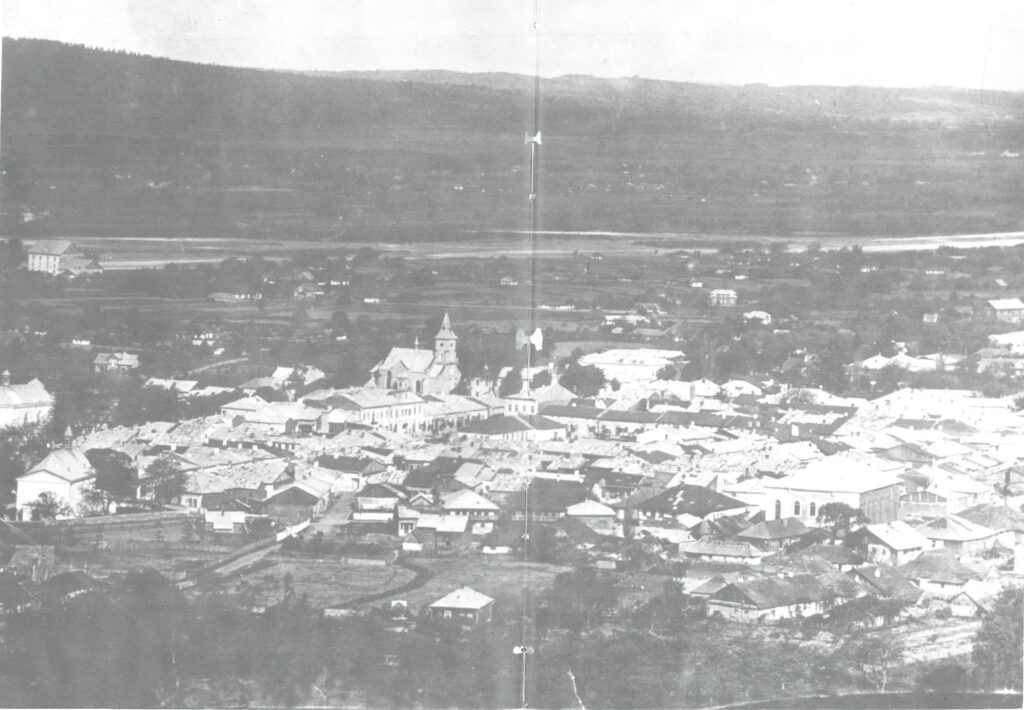
The town of Kitov
And during the Holocaust, among the many testimonies and documents about the towns of Vizhnitz and its communities that gave their lives in sanctification of the Name of G-d in the Ganzach Kiddush Hashem archive, we find a heart-wrenching description from the pen of a survivor from the town of Kitov, Isaac Hozen, of the last Passover in this historic Jewish town, in which the Baal Shem Tov would wander in solitude in the towns between it and Kosovo, and where the spring of water in which he would bathe is located. Kitov was full of Vizhnitz chassidim, and Vizhnitz’s beit midrash (study hall) in Kitov was full of chassidim and men of action who served their Creator with love and reverence, with simplicity and faith.
The last day of Passover 5702 will be recorded in the annals of the Jewish people as the day of the destruction of this holy community. After a holiday filled with horror and anxiety, the Nazis and their Ukrainian collaborators mercilessly massacred the Jews of Kitov, murdering over 900 men, women and children. Descriptions of this terrible murder were preserved and documented, and it is very difficult to contemplate them, because they transcend human understanding, and we will translate from Yiddish (from Yiddish to Hebrew by Yaakov Rosenfeld, then from Hebrew to English by Ricki Prince) a little of the stories of this town in its last days, with an emphasis on its Vizhnitzer shtiebel (small synagogue).
“In the history of the Jewish settlement of Kitov, the last day of Passover will be engraved as a day filled with blood and destruction. The sad day of the town. When all the synagogues were destroyed, the Torah scrolls were burned, and 950 Jews were murdered by the Nazis and Ukrainians.”
“Before that Passover, when the terrible famine was growing and growing, and people were dying of hunger and cold, the rabbi of Kitov permitted the preparation of ‘Kokorzeh Pletzelech’ (flakes or another pastry made of corn) and permitted them to be ground and baked even on Chol HaMoed (the intermediate days of Passover). Every Jew who had any clothing or object, who could, would put his life in danger and exchange them for a few kilos of wheat from a villager. The rabbi permitted the grinding of this wheat in coffee grinders and the baking of some matzah from it.”
“Many Jews held the Seder with a few potatoes and beets, the heart was torn with sorrow and compassion at the sight of respectable people, elderly Jews, former merchants, craftsmen, cart owners, especially to see pale Jewish children, all knocking on doors and asking for a piece of matzah, a potato, or at least a potato peel…”
“However, ignoring the tragic sights, a large part of the Jews demonstrated unreserved and incomprehensible loyalty to the mitzvot (commandments) and the service of G-d. This reminded us of the history of our ancestors in the dark days of the Inquisition and persecution, who would jump into flames of fire with their lips whispering ‘Shema Yisrael’ (Hear Oh Israel).”
“Here, the charedi (ultra-Orthodox) Jews of Kitov, whose lives were hanging on a thread, and who were in a worse situation than the situation of our ancestors in Egypt, arranged the 1942 Seder night on upside-down doors on which they sat like kings, with four cups of ‘borsht,’ and bran matzah, sat like kings and said ‘We were slaves.’ Once we were slaves, and we were redeemed from slavery…”
“When the Nazi terrorists entered the Viznitz kloiz (small synagogue) on the last morning of Passover, they found Jews there who seemed more spiritual than physical… They enthusiastically recited Hallel (prayers of praise to G-d) within their sadness. With their heads held high, the Jews of Kitov went to their deaths. A congregation of ‘Shabbat and Yom Tov oberserving Jews’… Their eyes shone with fire and their souls shone and their lips burned with the utterance of ‘Shema Yisrael’…”
“I remember an argument I had with the genius Rabbi Yehuda Leib Yetches (the last rabbi of Kitov), may God avenge his blood. He was a young, learned man at the time. I brought his family some potatoes, and I said to him: Apparently, our community, the Jews of Kitov, are a more sinful community than our neighbors in Kosov and Kolomyia, whose Jews are already peacefully resting in their graves, and we, who face the same fate, are still forced to go through seven hells of hard labour and hunger. Isn’t death better than seeing the women, children, and the elderly walking around like shadows?”
“What is death compared to what we are experiencing now?”
“‘ It is a great sin to speak like that,’ the rabbi answered me. ‘It is forbidden to even think like that.’ We must thank G-d for our temporary life. This is not the first time that various ‘Hamans’ want to destroy the Jewish People. In the end, they always end up defeated. We must believe and hope that we will still be worthy of Hitler’s defeat. If it will not be all of us who will be worthy of the day of liberation, certainly some of us will be worthy of surviving. We Jews will still leave the ghettos and return to our borders, and will still immigrate to the Land of Israel…”