Eighty Years Ago Today: Eichmann’s Escape from the American Army Camp
On Saturday night, when news broke of the capture of the Venezuelan president by US special forces in an airborne operation on enemy soil that was carefully planned and crowned with success; alongside the admiration for the sophistication and audacity of the army of the “leader of the free world”, it was difficult for us, as those involved in researching and documenting the history of the Holocaust period, not to recall the stinging loss of that army, exactly eighty years earlier, in early January 1946 (Tevet 5706) in the fortified camp in southern Germany, when the greatest of the Nazis, the murderer Adolf Eichmann, managed to quite easily escape from his American captors and find rest in Argentina, to which he had fled from Italy – his first escape route.
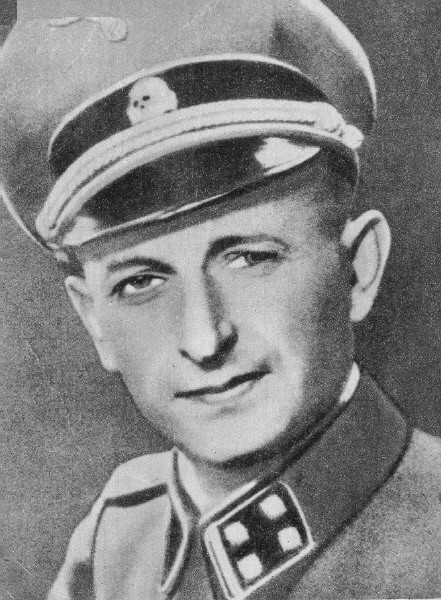
Adolf Eichmann, may his name be blotted out
Many years passed before the Israeli Mossad succeeded in discovering Eichmann under his false identity and bringing him to Israel in a bold move that went down in history. From Argentina in South America, the Jews brought Eichmann to the Land of Israel, where he was tried in 1961 in a long and highly publicized judicial process that opened the hearts of many Holocaust survivors in Israel and around the world. It is commonly argued that Eichmann’s late capture created social and psychological conditions that allowed Holocaust survivors to make their voices heard for the first time in Israeli society, and therefore, in retrospect, one should not regret Eichmann’s escape from the Americans 14 years earlier.
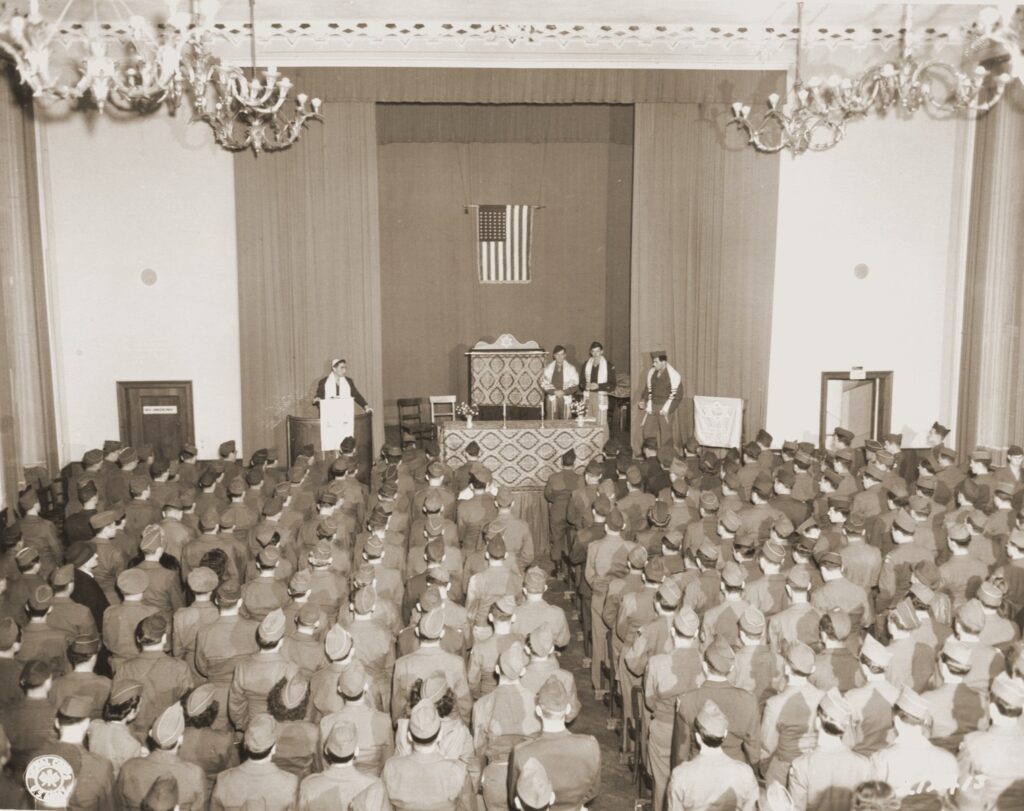
The American Army Kol Nidrei prayer service of Yom Kippur in Berlin, 5706 (1945)
The story of Eichmann’s escape and capture by the Mossad, by timeline:
His Capture and Escape (1945-1946)
In May 1945, after Germany’s surrender, Adolf Eichmann was captured by the American army.
He was not immediately identified as one of the main figures responsible for the “Final Solution” because he presented himself as a simple soldier.
Eichmann was held in an American detention camp in Bavaria (southern Germany).
In January 1946, after learning that investigators were beginning to take an interest in him, he escaped from the camp.
Living under a False Identity in Germany (1946–1950)
After escaping, he adopted a false identity under the name Otto Heninger.
He hid for several years, mainly in northern Germany (the Lower Saxony region).
He worked odd jobs, including as a forestry worker and a farmer.
During this period, he survived with the help of aid networks of former Nazis.
The Escape from Europe (1950)
With the help of the so-called “Ratlines” – smuggling networks operating in Europe – he managed to:
Reach Italy
Obtain Red Cross travel documents
Leave for Argentina in 1950
In Argentina, he lived under the name Ricardo Klement, raised a family, and worked in a factory.
His End
In 1960, he was located by the Israeli Mossad.
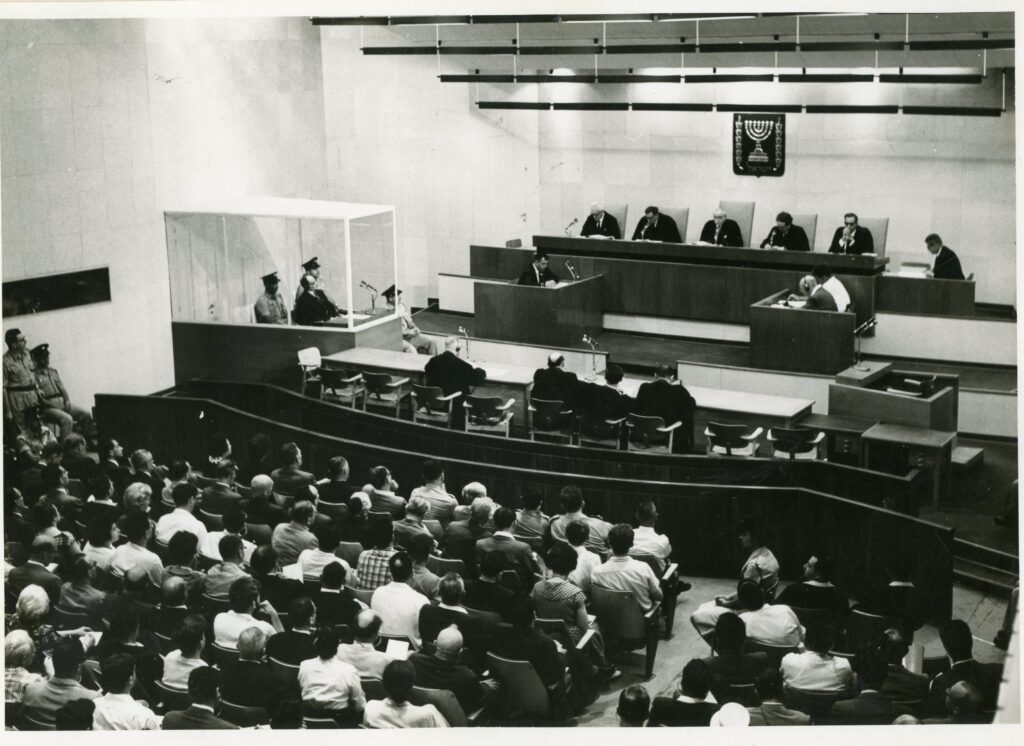
Trial of Nazi criminal Adolf Eichmann in Jerusalem
He was brought to Israel, tried, and convicted of crimes against humanity.
Executed in 1962

The rabbi who jumped from a burning helicopter, in the twilight of Yom Kippur Eve.
However, another news item in the press that day (January 2, 1946) caught our eye and excited us. Here it is, in free translation: A wonderful story about an American military rabbi who parachuted from a burning military helicopter on his way to a group of American soldiers waiting for him on the eve of Yom Kippur at a military camp in New Mexico. The story is taken from a letter that arrived that day to the editor of the Jewish Welfare Board newspaper, and is quoted in the “Morgen Journal.”
The letter was written by B. Broinstein, a Jewish soldier from Brooklyn, and as mentioned it was published only 3 months later.
The Jewish military chaplain, Mr. Solomon Rosen from Brooklyn, planned to come to the army camp to recite Kol Nidrei with hundreds of soldiers and lead all the holiday prayers for them, but for some reason his arrival was delayed and the Jewish soldiers, warriors who had sacrificed their lives in World War II, waited for him anxiously, looking at the sky with concern, following the sun that was about to set. Kol Nidrei, the young soldiers knew, was said at sunset, and the chaplain who was supposed to lead the service was supposed to be there a long time ago…
Then, towards evening, the soldiers noticed a mushroom cloud of fire swirling above their heads. They looked around, and immediately realized that a military helicopter was on fire. Suddenly, a figure emerged from the flames and slowly descended toward them.
It wasn’t long before the man who had safely descended into the military camp to the astonished eyes of the soldiers was revealed to be none other than Rabbi Solomon (Shlomo) Rosen, the military rabbi (chaplain) for whom hundreds of soldiers had been waiting for a long time!
The rabbi did not hesitate and ordered the place of prayer and the prayerbooks to be prepared immediately, and stood up to pray Kol Nidrei that shook the heart and soul.
After the prayer, the rabbi said:
We were already near the camp when the helicopter started to burn; he didn’t know what to do, and was already thinking of giving up. He had never parachuted from a plane and wasn’t even sure he knew how to do it, but the thought that hundreds of soldiers were waiting for him for Yom Kippur prayers and they had no one to lead the holy day’s work for them gave him the strength and courage to parachute safely, when at the beginning of the process, which of course took a few seconds, he wasn’t sure he would make it to the ground safely.
311 Jewish chaplains worked during and after World War II with wisdom, heroism, and wonderful Jewish sensitivity. The work of the military rabbis was celebrated after the war, and some of them were published as part of Ganzach Kiddush Hashem’s testimonies project.