Lag Ba’Omer 5684 – May 22nd, 1924
98 years since the cornerstone laying ceremony for the Chachmei Lublin yeshiva.
(Originally published in May 2022 on our Hebrew site)
The laying of the cornerstone for the largest and most magnificent yeshiva in the world was a tremendous event, the likes of which had never been experienced in Jewish Poland before.
The documentation published in the world press expressed a Jewish strength that broke boundaries and a refreshing renewal that resonated in the hearts of hundreds of thousands around the world.
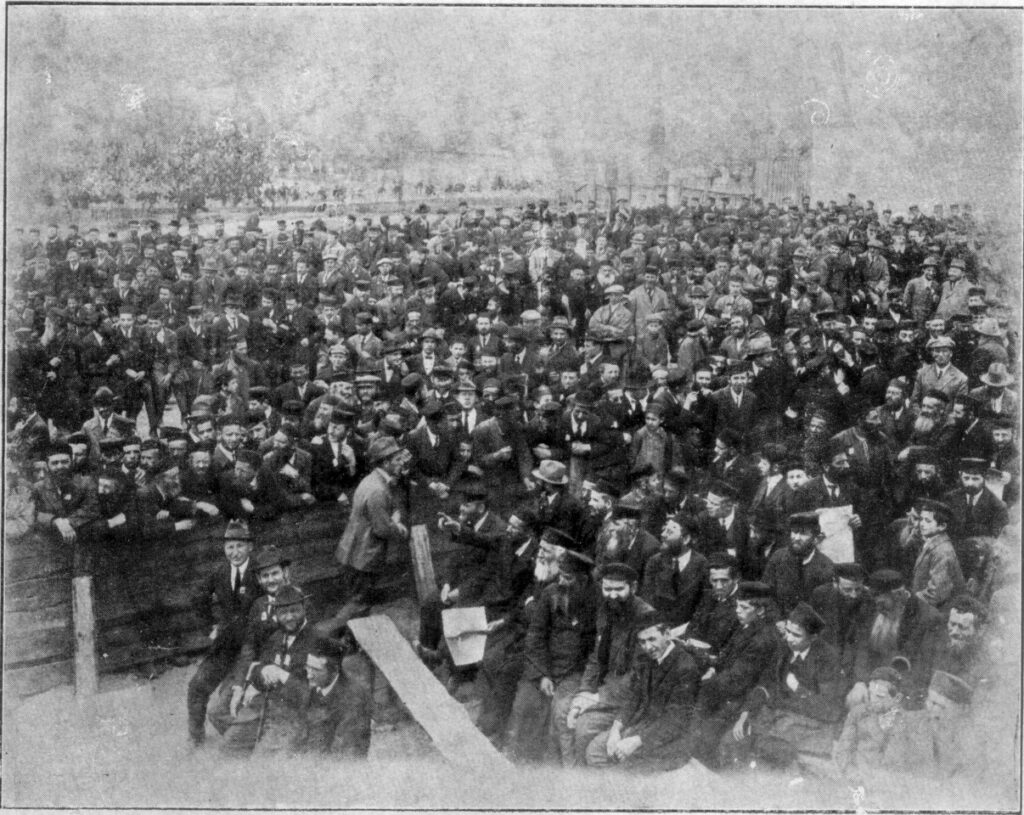
Hundreds of participants at the cornerstone laying ceremony for the Chachmei Lublin Yeshiva in Poland
The news of the new yeshiva that raised the banner of Torah and the banner of the Jewish People raised Jewish national morale and fostered an anticipation filled with endless excitement among countless Jews throughout all the countries of Europe and the Jewish world, whose eyes were already drawn towards the magnificent building in its construction and splendour, a building that was indeed preeminent and a great Jewish symbol that expressed strength and power and restored the rooted Jewish pride, the Judaism of the labour in the Torah and the sharp “Jewish mind” that found rest in the workshop of the great religious men and teachers of the new generation.
The students of Chachmei Lublin, the best yeshiva in the world, did not disappoint, and the result was amazing by any standard; unique photos and memories preserved in the archives of Ganzach Kiddush Hashem, a record of beautiful days of blossoming and blooming, but today these photos bring boiling tears to the corners of one’s eyes. A piercing sorrow for a blooming flower garden that was completely destroyed in the days of wrath.
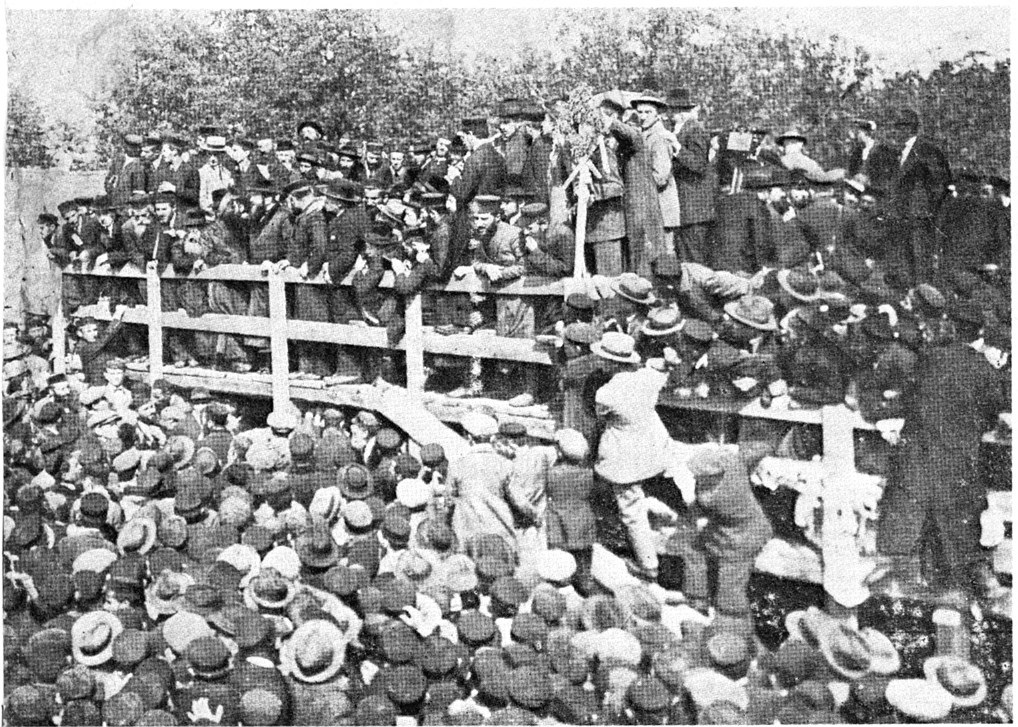
The Czortkower Rebbe, Rabbi Yisrael Friedman, speaks at the Chachmei Lublin cornerstone laying ceremony
The Chachmei Lublin yeshiva, all of its students and graduates, most of whom “went up on the altar”; the beautiful and large building that has become such a symbol of active, vibrant, scholarly and chassidic Polish Jewry, stands today in its place, almost a hundred years after the cornerstone was laid, ninety years after its dedication and eighty years after the Nazis’ brutal invasion of the yeshiva, sowing destruction and ruin in every corner.
On the day the accursed broke into the yeshiva building, they broke into the large library that was a household name in the world of Torah.
Twenty-two thousand books were arranged in heavy wooden cabinets. Some of them were valuable holy books that the young passionate men used to expand their knowledge and fill their minds. The Nazis collected all of these and arranged them in a pile outside the yeshiva building, and set them on fire. Here is a quote from the German youth magazine: “Deutsche Jugend Zeitung”:
It was our pride to destroy this Talmudic academy, which was known to be the greatest in Poland. We threw out all the Jewish holy books and set them on fire. The flames raged for twenty hours. The Jews of Lublin stood around and cried, but a military band was called in and the cheerful sounds of the soldiers’ music silenced the wailing of the Jews.
It is difficult to read these heartbreaking lines. But we must not forget.
The world of Torah has been restored, in the Land of Israel and in the countries of the West and Europe, not least thanks to the spirit and legacy of Rabbi Meir Shapira of Lublin, whose light will never be extinguished. However, the piercing sorrow for a wonderful world that was and is no longer, gives no rest.
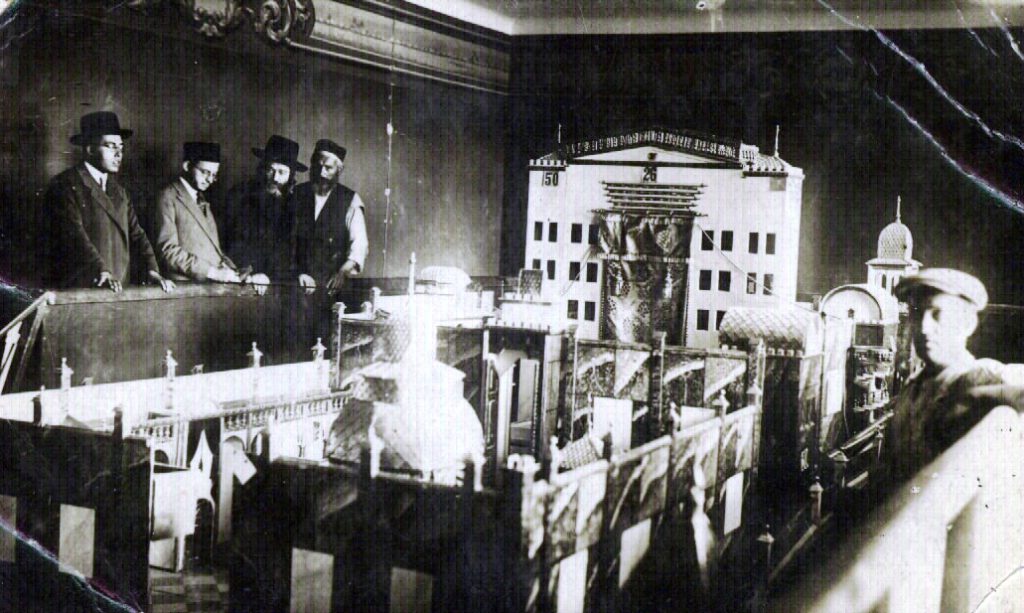
Rabbi Meir Shapira, head of the Chachmei Lublin yeshiva, receives the journalist, Rabbi Moshe Prager (who later founded Ganzach Kiddush Hashem), in a hall in which a model of the Temple, built by the artist, Chanoch Weintrob, was on display