Rabbeinu Tam, His Life and Legacy
Presented following Sivan 15, Sivan 20, and his approaching yahrzeit (anniversary of passing) on Tammuz 4
By: Yaakov Rosenfeld, Ganzach Kiddush Hashem
Rabbeinu Tam – the name that has stirred the hearts of Jews for nearly a thousand years…
Rabbeinu Tam, the grandson of Rashi, is the one who founded the path and system of the Tosfot commentaries.
The gift that the Tosfot gave to the Jewish People throughout the generations cannot be expressed in words, because in every generation, Jews of all types would simply immerse themselves in any “dibbur hamatchil” (beginning line) and immediately forget everything that weighed on the heart, because the words of the Tosfot, no matter how difficult, no matter how long, no matter how complicated, have a miraculous power to restore the soul, and quite simply to cleanse the brain of everything bad that clung to it.
V’Et, V’il, Tima – acronyms for Hebrew phrases meaning “If one wants to say,” “One could say,” and “A difficulty for me” – are code words for a wonderful world of toil in Torah and theoretical immersion in its mechanisms. Tosfot are studied in the stillness of the mind, patiently, with all the time in the world, not moving until they understand every syllable, and then they turn to peruse the Maharsha commentary. There is no gentile in the world who would understand this pleasure. There is no foreigner who would have any concept whatsoever with shining eyes after understanding the Maharsha according to the method of our Rabbeinu Tam…
And these dense, small lines were the object of longing for countless scholars of Torah even then, in the ghettos and camps. And when an old yellow page, an ancient Gemara with Tosfot in its margins, came into their hands, this find would comfort their broken hearts and infuse their souls with strength and power. These are the amusements of the Jewish people from generation to generation, “If your Torah were not my amusement, then I would have perished in my poverty.”
Yaakov the Simple Man
Rabbeinu Tam was the uncle of Rabbi Yitzchak HaZaken, who compiled the first organized Tosfot commentary, and he is the one who began the period of the Tosfot which continued for 200 years, and accompanied the Jewish People in the difficult period of the Crusades. Rabbeinu Tam himself miraculously escaped death, but among his renowned students were those who gave their lives in sanctification of the Name of G-d: Rabbi Yosef ben Yitzhak (Rabbi Yosef Bechor Shor of Orleans), a student of Rabbeinu Tam; Rabbi Petter ben Yosef, who was killed in sanctification of the Name of G-d in Carentan during the Second Crusade; Rabbi Yaakov of Orleans, known as Rabbeinu Tam of Orleans, was killed in sanctification of the Name of G-d in London on the day of the coronation of King Richard I (“the Lionheart”); and Rabbi Yom Tov ben Yitzchak of Joigny, who was killed in sanctification of the Name of G-d in the massacre of the Jews of York in England.
Rabbenu Tam was the greatest of his generation, and his influence was decisive for the time and for generations. The Ibn Ezra, a contemporary of his, called him with admiration “the angel of G-d,” and in a rhyming poem he called him “the knight of God, the people and the shepherd.”
Rabbi Yaakov, who was called “Rabbeinu Tam” after the Torah phrase “Yaakov Ish Tam” (Yaakov the simple man) was born in the town of Ramerupt around the year 4860 (1100) to Rabbi Meir of the town of Ramerupt, and to Yocheved, daughter of Rashi.
After Rashi opened the gates of the Babylonian Talmud to the general public, and about whom it was said, “If it had not been for him, the Babylonian way would have been forgotten by the Jewish People” (Rabbi Menachem son of Rabbi Aharon son of Rabbi Zerach, Sefer Tzeida Laderech), his descendants and students, scattered throughout the cities of the Rhine, Luther, and Champagne, came, and in their yeshivahs they composed “Tosfot” (additions) to Rashi’s wonderful way, and they were the ones who brought about the Torah being the bread and butter of the Jews throughout Ashkenaz (Germany) and France, and as the book “Tzeida Laderech” says: “And due to our Rabbi Shlomo (Rashi) and his grandson, they studied Gemara and are studying in all the places that we have heard and known… and they are the distant and close reason.”
The influence of Rashi and the Tosfot on their students and on the entire generation, and since then for generations to come, was great. They engage in Torah with labour, dedication, and complete devotion, and as the Samag (acronym for Sefer HaMitzvot HaGadol – Great Book of Commandments) says, the students of Rashi and the Tosfot in France “would not take off their shoes except on Shabbat night, since they study all week nights and lie down a little in their clothes…”
The Tosfot, which were formulated in the lessons of the yeshiva heads and in the debates with the students, are the basis for the Tosfot sections that are printed today in every Babylonian Talmud, but it is known for certain that they are only a part of the Tosfot compositions, which were vast.
The Great Light
As stated, the foundation for this method was laid by Rashi and his grandson, Rabbeinu Tam, and who is greater to us than the disciple, the Ran, the great posek (rabbinical decisor) from the time of the Rishonim, Rabbeinu Yitzchak bar Sheshet (the Rivash), who wrote as follows:
“The great light, Rabbi Shlomo (Rashi), a righteous man of blessed memory, revealed the depths of the Talmud from darkness, not obscured by it, closed and obscured by others, his interpretation was like a sealed book, and the second light, Rabbi Yaakov (Rabbeinu Tam), a pure man, who was like him in his eloquence since the Talmud was sealed, Talmud was in his mouth and he was both knowledgeable and sharp and ground these together, from his eloquence and the depth of his intellect and the breadth of his understanding…”
Rabbeinu Tam was involved in the business of lending and wine production, and had commercial relations with knights and rulers, but his greatness in Torah and his influence for the time and generations were unquestionable. This is expressed in the exchange of letters between him and the great men of his generation, even those who were older than him in years, and also in the words of our great rabbis who went out of their way to express their greatness in rare expressions about Rabbeinu Tam, and even from our rabbis from other countries, and let us take as an example the words of Rabbi Avraham ben David the First, the author of the Book of Kabbalah, who was in Spain:
In the land of France there was a great sage and a distinguished rabbi in the state of Ramerupt, his name was Rabbi Yaakov, may God preserve him and give him life and grant him the privilege of studying, teaching, and preaching Torah to the Jewish People.
In the midst of the Second Crusade, a difficult event occurred to Rabbeinu Tam, from which he miraculously survived, but because of it he was forced to leave Ramerupt and relocate to a new place, and this is what happened:
And on the second day Shavuot, the wanderers from the land of France gathered in Ramerupt, and came to the house of our Rabbi Yaakov and took everything that was in his house, and tore up a Torah scroll in his face, and took him and brought him out into the field, and spoke to him judgementally about his religion, and they tried to kill him, and on his body they wounded him five wounds on the head, for they said: You are the great one of Israel, therefore I have taken revenge on you for the hanged man, and I have wounded you, just as you wounded our God five wounds! And his pure soul would have almost died, were it not for the mercy of our Creator who took pity on his Torah. And G-d appointed a great ruler for Rabbeinu Yaakov on the way to that field, and he called him Rabbeinu, and he bribed him with a horse worth five thousand of the currency. The ruler went and spoke to the hearts of the erring ones, and they were moved by his words, and he said to them: Leave me alone today, and I will speak with him. Perhaps he will be pleased and we will be able to incite him. If he does not, know that tomorrow I will be in your hands! And so they did, and the evil hour was postponed by the mercy of the G-d upon His people, and He took pity on the one who was oppressing them and His holy Torah.
From there, Rabbeinu Tam moved to Troyes and studied Torah there, after losing his assets in Ramerupt. However, his status as the greatest of his generation remained firm and unquestioned, and there, in Troyes, he established the famous dowry law.
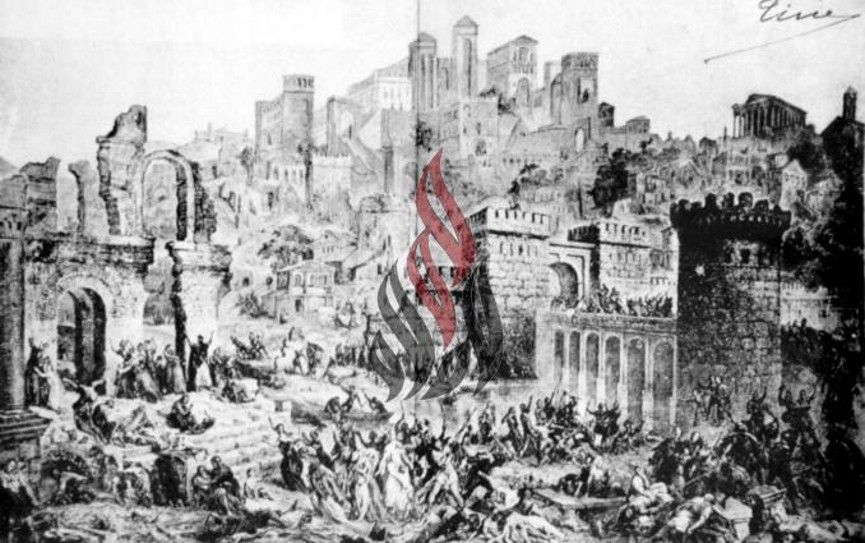
The Crusade in the city of Metz (Ganzach Kiddush Hashem archive)
Blood Libel in Blois
On the 15th of Sivan 5531 (1171), the terrible blood libel in Blois occurred, which took place in collaboration with the official authorities, and was thus distinguished from other blood libels, and also in that it took place even though no body was found during the development of the libel.
And so it happened:
The First Blood Libel in France: The Martyrs of Blois (4531, or 1171 in the secular calendar)
It all began on a routine day on the banks of the Loire River. Yitzchak ben Elazar, a Jew from the city of Blois, arrived to at the river to give water to his horse. At that very moment, a gentile servant also arrived to give water to the horse of his noble master. While moving, a piece of white processed leather fell from Yitzchak’s lap. The gentile servant, who saw the object fall into the water, hurried back to his master and charged the Jew with a terrible false accusation: he said that he had seen him throw the body of a child into the river.
Blois was fertile ground for such evil plots. Tensions between the city’s nobles and the Jewish community were already high, mainly due to their jealousy and hatred of Ms. Pulcelina – a wealthy and influential Jewish widow. Pulcelina had extensive business connections, and many of the region’s nobles, including members of the family of the Count of Blois, Theobald (son-in-law of King Louis VII), owed her large sums of money. Countess Alix, Theobald’s wife, was particularly jealous of her.
The local noble immediately took advantage of his servant’s story to plot a blood libel that would solve the debt problem. He turned to Count Theobald, who by then had already turned his back on Pulcelina, and told him the story. Although no body was found and no child in the city was reported missing, the count ordered the immediate arrest of all the city’s Jews.
The Trial and the Verdict
Initially, Theobald sought to exploit the situation to extort a huge ransom from the Jews and the cancellation of all debts owed to them. However, a local priest intervened and convinced him that a ransom should not be accepted in a place where blood had allegedly been shed. The priest suggested that the slanderous servant be subjected to their customary “G-d’s trial”: the servant was placed in a tub full of water, and since he floated on top of them, the judges determined with certainty that he was telling the truth.
The sentence was cruel: death by burning at the stake.
Pulcelina was not initially included among the prisoners. She tried with all her might to use her old connections with the Count to overturn the evil decree, but his aides prevented her from meeting with him. Ultimately, as part of the desire to silence the debt claims, she was also arrested and thrown into the fire along with the rest of the community.
During the terrible fire, the ropes that bound three of the Jews burned and they managed to free themselves. They cried out that their rescue from the fire was divine proof of their innocence, but the count’s men refused to listen. When the Jews tried to struggle and drag one of the men who had approached the fire with them, the guards attacked them, killed them and threw their bodies into the stake. On that terrible day, 31 Jews perished in sanctification of the Name of G-d, 17 of them women.
Rabbi Ephraim of Bonn, who was the first to document the disaster in his “Sefer Zechira” (Book of Remembrance); describes a heart-wrenching scene: The entire community – men, women and children – marched to the stake with only one song on their lips. They began to sing the prayer “Aleinu LeShabeach” (We Must Praise G-d) in a low voice, and as the fire rose, they raised their voices together in a loud cry until their souls departed in purity.
The Shock and Reaction of French Jewry
The event in Blois sent shockwaves and deeply shocked the Jewry of northern France. Up until that time, the French authorities had not cooperated with the masses in the blood libels and had not imposed punishments on the communities. This was the first time that the official government had given a hand in the murder of Jews in a plot invented without evidence. The fear of a change in policy and the danger to all Jews in the region led to an unprecedented spiritual and communal response.
Many communities took upon themselves fasts and mourning customs. The community of Troyes (the city of Rabbeinu Tam) decreed that it would not wear silk clothes for three years, and would fast every Monday and Thursday until the end of that year.
Influence for Generations
The great leader of that era, Rabbeinu Tam, established a permanent fast for generations on the 20th of Sivan in memory of the martyrs. He attributed enormous importance to this fast and said of it: “This fast will be greater than the fast of Gedaliah son of Achikam.”
The event was immortalized in the Jewish People’s Kinnot (Elegies) and Slichot (prayers regarding forgiveness, recited in the period preceding Rosh Hashana):
Rabbi Ephraim of Bonn composed the lament “Lemi Oy, Lemi Avoy” (Woe to Me, Woe to Me), which is structured according to the order of the letters of the Book of Eicha (Lamentations).
His brother, Rabbi Hillel of Bonn, composed the famous slicha (one of the Slichot) “Amoni Shlomi Yisrael,” which describes the sequence of events and the heroism of the Jews. Over the years, this slicha has entered the prayer cycle of some Ashkenazi communities and is recited in the Musaf prayer of Yom Kippur.
This libel gave rise to similar libels in Pontoise, Lunéville, and Loches, and in the book “Gezerot Ashkenaz Tzarfat” (The Decrees fo Ashkenaz and France) the messenger of Rabbi Yom Tov of Orleans who went into exile describes to “our holy Rabbi” Rabbeinu Tam the terrible decrees.
According to the version of this book, all the communities of France and the islands of the sea and the Rhine accepted this day as a day of mourning and fasting “by the will of their souls and by the commandments of the great Rabbi Yaakov ben Rabbi Meir, who wrote books about them and informed them (…) that it is Yom Kippur.”
After this incident, Rabbeinu Tam wrote a teshuva (rabbinical decision) on the matter of sanctifying the Name of G-d and ruled that “when one fears lest they lead foreigners into transgression, such as through torture that he cannot bear, then it is commanded to inflict it himself,” and he also ruled not to mourn for children who were baptized into Christianity and died, “for it is customary not to mourn but to be happy and joyful”… (Or Zarua, Part 2, Section 428).
A few days after this event, Rabeeinu Tam died of a heart attack on Wednesday, Tammuz 4, 4931 (1171) (although Rabbi Ephraim Orbach, from whose research I have drawn much, does not set a date specifically for this date, but rather for its vicinity, see Ba’alei HaTosfot, Bialik Publishing House, 5740, p. 112).
Rabbeinu Tam was buried in the ancient cemetery in the city of Ramerupt. In 5765 (2004-5), an effort was made to restore and demarcate the cemetery. Among the graves are also buried the Rashbam and Rabbi Yitzchak HaZaken.
The passing of Rabbeinu Tam was, of course, a terrible loss for his many students and for all of the Jewish People, and as his nephew, the author of the Tosfot, Rabbi Yitzchak HaZaken, expressed it at the time: “The light of the world has gone out and the Ark of the Covenant has been taken away,” and his student, the author of the Tosfot, Rabbi Chaim Cohen, said: “If I had not been present when Rabbeinu Tam passed away, I would have become impure for him” (despite him being a priest – Tosfot on Ketubot 102).
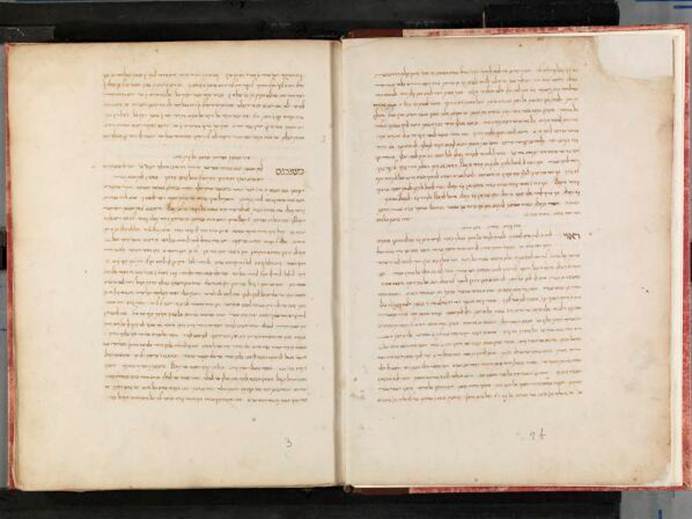
The Decrees of Rabbeinu Tam (courtesy of the National Library of Israel)
Translation from the French Wikipedia page for the town of Ramerupt:
In the 12th century, the town was the birthplace of an important Jewish spiritual movement: the Tosfot, which are medieval commentaries on the Talmud.
The yeshiva was attended by students from all over Europe. The head of this yeshiva was Rabbeinu Tam, who was born in Ramerupt and was the grandson of the famous rabbi, Rashi.
The vitality and flourishing of this center of Talmudic learning came to a sudden and violent end on May 8, 1147, when Crusaders, on their way to the Second Crusade, stopped at the yeshiva to destroy all the documentation and books (manuscripts) it contained.
The following entry details the historical sites of Ramerupt:
Rashi Street: A street in the town named after the holy Rashi, grandfather of Rabbeinu Tam and the Rashbam, who worked in this area (Champagne region) and laid the foundations for all Torah study in Europe.
Chapelle des Tossafistes: A memorial room / memorial site dedicated to the Tosfot.