Shalom Tepper, May G-d Avenge His Blood
The holy young man, the last remainder of a well-established family, who survived the Holocaust, took it upon himself to protect the people of Israel and “would pray to his God with immense devotion…”
On Yom HaZikaron (Israel’s memorial day for fallen soldiers and victims of terror), we at Ganzach Kiddush Hashem bowed our heads, lit a candle, and prayed in memory of those who fell in sanctification of the Name of G-d, martyrs whom nobody can take the place of.
Every soldier who falls while protecting the people and the country is a whole world, every young person whose life is cut short leaves behind abysses of grief, and we all pray that there will be an end to Israel’s troubles and that from now on, no tragedies will befall Jewish homes in any group or community.
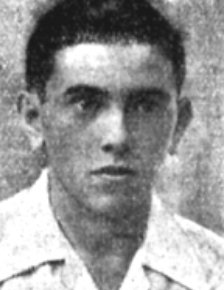
One of the martyrs who sanctified the Name of G-d, who died in holiness and heroism while fiercely defending the remnant of the Jewish People in the Homeland, is the holy young man Shalom Tepper, a precious and beloved boy, who was granted closeness to G-d. After years of suffering and torture under the Nazi regime during the Holocaust, in which he lost his parents, Dov and Tova, and his entire family – may G-d avenge their blood, he immigrated to the Land of Israel alone, and there, in out ancestors’ beloved land, he was killed in sanctification of G-d’s Name on the 26th of Kislev 5709, and was buried in the cemetery in Nachalat Yitzchak.
Below is an outline of his character, courtesy of the Ministry of Defense website:
Shalom, the son of Tova and Dov, was born in the 5th of Tevet 5685 (Jan. 1st, 1925) in Poland in the town of Bialobrzegi, in the vicinity of Radom, in the province of Kielce.
On the eve of World War II, Poland was the main Jewish center in the areas of religious, national, political, social, and cultural activity. About three and a quarter million Jews lived there. The severe economic crisis that struck the world in the late 1930s had a severe impact on Poland’s economy and led to an exacerbation of antisemitic undertones and the marginalization of Jews, who were considered to have a key position in economic life. They suffered from anti-Jewish economic boycotts and pogroms, which increased in number.
On September 1st, 1939, World War II broke out with the German invasion and occupation of Poland in a blitzkrieg. Immediately afterwards, anti-Jewish decrees and regulations were issued that led to the social isolation of the Jews, their economic dispossession, and the undermining of their entire way of life.
After the occupation of Bialobrzegi in 1939, a ghetto was established there, to which members of the small Jewish community were brought. The ghetto was active until 1942, and many refugees from other places were also concentrated there. On October 1st, 1942, the residents of the ghetto were deported to the Treblinka extermination camp, where most of them perished.
By the end of the war, about three million Polish Jews had perished.
When the war broke out, Shalom’s father died. His mother and his entire family were taken to the crematoriums by the Nazis. He himself was taken to a labour camp in Germany, from where he was sent to Auschwitz and Majdanek, but miraculously survived.
Shalom managed to escape the concentration camp and joined the partisans in the forests of Poland. He lived as a partisan and fought the Nazis as best he could until the end of the world war.
After the liberation, he joined the “Youth Aliyah.” In 1946, he immigrated to Israel from France, and for over a year he lived in a boarding school run by the “Agudath Israel.” After being forced to live as a Pole during the war, the fire of the Jewish religion was kindled in him, and he often prayed with great devotion. After his stay in the boarding school, he moved to Petach Tikva, and made a living from his own labour.
At the outbreak of the War of Independence, Shalom enlisted in the “Haganah” and served in the religious company of the 33rd Battalion in the “Alexandroni” Brigade – Brigade No. 3. He participated in many operations, including the battle of Tel Litvinsky and the battle to capture Tantura, in which he particularly distinguished himself. Usually his role was as a departmental runner, and he was very well liked by his friends and commanders.
Shalom’s ambition was to establish a religious unit in the commandos or paratroopers, and throughout his service he never stopped requesting a transfer there.
In December 1948 Shalom fought in the south, in Iraq al-Manshiya.
As part of Operation “Chorev” to liberate the Negev, a decision was made to launch an “elimination” operation against the “Falujah pocket” in the south (near the Plugot junction), where an Egyptian brigade was besieged. The attack was conducted on the eastern flank of the “pocket”, in the area of Iraq al-Manshiya – an Arab village located near Tel Irani, not far from present-day Kiryat Gat.
On the 26th of Kislev 5709 (28.12.1948), “Alexandroni” forces broke into the village from the south and took control of part of it, but their assault on the hill north of the village was driven back. In the meantime, the Egyptians recovered, launched a counterattack and forced our forces to retreat. Shalom, despite being wounded, continued to fire until he fell. Nearly ninety of the company’s fighters fell with him.
He was twenty-four years old when he fell. Shalom and his friends were buried there by the Egyptians, and a short time later were brought to eternal rest in the military cemetery in Nachalat Yitzchak.
The fallen is a “netzer acharon” (a last remnant).
“Netzer acharon” fallen are Holocaust survivors who are the last remnant of their nuclear family (parents, brothers, sisters, sons, and daughters), who experienced firsthand the horror of the Holocaust in the ghettos and/or in the concentration and extermination camps and/or in flight and hiding in the territories occupied by the Nazis and/or in fighting alongside the underground or partisans in the territories occupied by the Nazis and immigrated to Israel, during or after World War II, wore a uniform and fell in the battles of Israel.