Sochaczew and Its Righteous
100 Years Since the Passing of the Shem MiShmuel Rabbi
By: Yaakov Rosenfeld
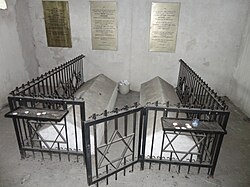
The graves of the Avnei Nezer and Shem MiShmuel rabbis, Sochaczew
On the 24th of Tevet 5786 (corresponding to Jan. 13th, 2026), the 100th anniversary of the passing of the genius holy Rabbi Shmuel Bornstein of Sochaczew, author of the Shem MiShmuel, and one of the righteous men of his generation, the son of the Avnei Nezer and the grandson of the Kotzer Rebbe, we commemorate with pain and brokenness, the destruction of Sochaczew, a major Jewish community. On the 20th of Tevet 5701 (January 19th, 1941), thousands of its Jewish residents were concentrated in a crowded compound within a barbed wire fence and from there they were deported to Warsaw, where they met the fate of 350,000 Jews of Warsaw, the large Jewish community that was completely destroyed by the wicked ones. May G-d avenge their blood.
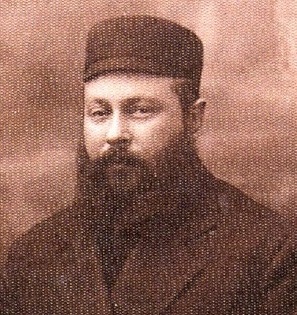
Rabbi Alexander Zusha Friedman
Another landmark: Exactly one hundred years ago, in 5686 (1925-6), a native of Sochaczew, the revered Rabbi Alexander Zusha Friedman, a man of education, thought and leadership, author of the book Ma’anyana Shel Torah, ran in democratic elections for member of the Warsaw Community Council on behalf of Agudath Israel. From the Polish Jewish Heritage website: “Alexander Zusha Friedman, a journalist and writer, who was the general secretary of Agudath Israel in Poland, used to come to Sochaczew often to lecture to the local community.” (Another name from that period: The Bais Yaakov girls’ school of Agudath Israel had 150 students. The school operated in a spacious building donated by another of the Sochaczew emigrants in the United States. In 1937, Agudath Israel opened a boys’ school called “Yesodei HaTorah.” Starting in the late 1920s, the municipality maintained a 7-class elementary school for Jewish children (known as Szabaszowka, because they did not study there on Shabbat and Jewish holidays).
Sochaczew, located 52 kilometres southwest of Warsaw, the capital of Poland, between the two tributaries of the Bzura River, was for centuries a haven for Torah and chassidism, from at least since about 1420, and its cemetery is one of the oldest in Poland.
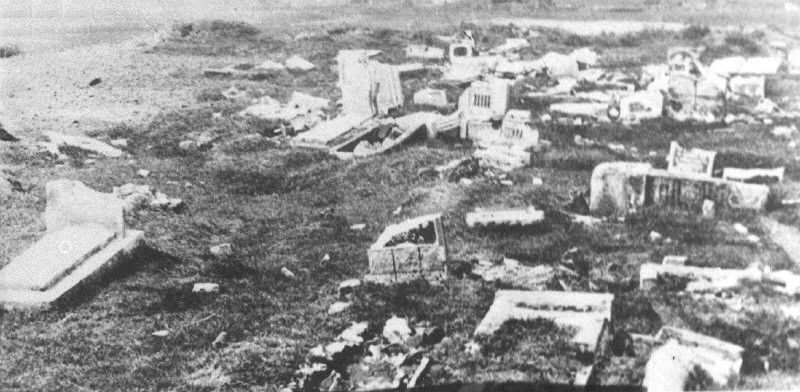
The destroyed Jewish cemetery in Sochaczew
Great men and true tzaddikim (righteous people) lived in Sochaczew. From them, it became known that in a previous generation, the brother of the Shach rabbi, the holy Rabbi Yona Nachum HaKohen, had the Ruach HaKodesh (G-dly Spirit) appear in its batei midrash (study halls), and the elders of the city passed this down from generation to generation.
Rabbi Yona Nachum wrote about himself “an ember saved from the fire” because he arrived in Sochaczew after fleeing his hometown in the state of “Merin” where thousands and tens of thousands of Jews were murdered during the period of Tacht V’Tat (Cossack uprisings in 1648-9). After being saved from death, he was blessed with a wife – the daughter of the wonderful gaon, the author of “Birkat HaZevach,” the father of the “Kav HaYashar”. Great men throughout Eastern Europe were proud to refer to their elder Rabbi Yona Nachum HaKohen, the glory and honour of the Sochaczew community in old times.
And it is written about him in the old register of the Chevra Kadisha (burial society) that before his death, he promised the city that in the event of a time of trouble, G-d forbid, they would come to pray at his grave, and the city would be saved. Individuals would also receive help. According to what appears in the “Pinkas Sochaczew,” after his death the community waited until the end of the thirty days, and then they decided to erect an ohel (small building) over his grave. When they went to the cemetery to do this, they did not find the grave, and therefore no ohel was erected. Others said that individuals were privileged to see the grave and pray there, and were saved.
Also the Panim Meirot, Rabbi Meir Eisenstat, the great student of the Magen Avraham, spent many years in the city of Sochaczew as the son-in-law of “the very important leader, Rabbi Moshe Sochaczewer.” Incidentally, Rabbi Moshe was a minister and a great man, and in the introduction to Panim Meirot, his son-in-law is described as follows: the very important community leader, Rabbi Moshe Sochaczewer z”l performed much charity in the Jewish community and his righteousness stands forever, having saved 24 souls whose lives were in danger in the great trial of the Tribunal in Lublin of Sochaczew Jews… Through the strength of his efforts, G-d gave him favour in the eyes of the king and the ministers who sat in the Kingdom of Poland and saved them all… And it turned out that he emerged free from all his property and the property of his sons.
The holy genius, Rabbi Avraham, the Avnei Nezer, served as the rabbi of the city, where he established his sacred court and the renowned yeshiva that produced great students of Torah and chassidism.
From 5670 (1910), the year of the Avnei Nezer’s passing, his son, the Shem MiShmuel served in Sochaczew, until the outbreak of World War I, during which Rabbi Shmuel was forced to flee this city and move to Lodz, and from there to Zgierz. The Shem MiShmuel is considered one of the greatest and most righteous of the generation, and thousands of chassidic Jews flocked to his court. As stated, a hundred years ago, on the 24th of Tevet, 5686, he passed away while in the resort town of Otwock and was buried in Sochaczew, in his father’s ohel. He left behind sons and grandsons, most of whom perished in the terrible Holocaust, may G-d avenge their blood.
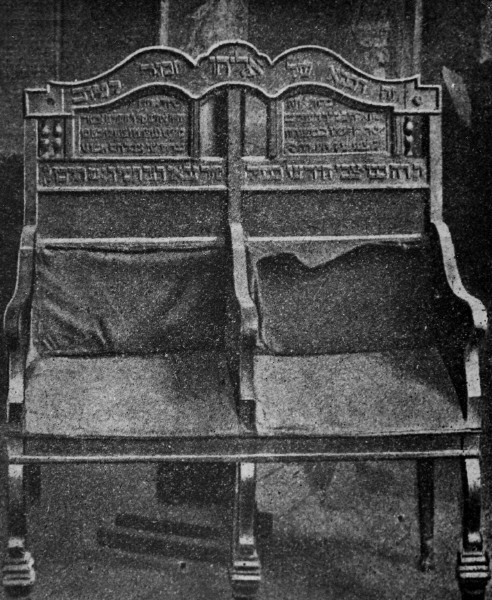
The kiseh Eliyahu (Eliyahu’s Chair – used during circumcisions) in the Sochaczew synagogue
From the Polish Jewish Heritage website:
“An important turning point in the life of the Jewish community in Sochaczew occurred with the settlement of the city in 1884 by the Rebbe, Rabbi Avraham Bornstein. He was appointed as rabbi and head of the beit din (religious court), but he devoted most of his time to his hundreds of followers, who flocked to him from all over Congress Poland. Rabbi Avraham (known as Sochaczewer) was the student and son-in-law of Rabbi Menachem Mendel of Kotzek and continued the tradition of Kotzk chassidism. In Sochaczew, Rabbi Avraham founded a yeshiva and personally supervised it. He became famous in the chassidic world by his works “Avnei Nezer” and “Eglei Tal.” During the days that Rabbi Avraham served as Rebbe, a large beit midrash (study hall) was established, within whose walls hundreds of worshippers gathered who came to visit their Rebbe on Shabbat and holidays. After Rabbi Avraham’s death in 1910, his position was taken by his son, Rabbi Shmuel Bornstein, author of “Shem MiShmuel.” Rabbi Shmuel refused to accept the burden of the rabbinate, left Sochaczew, settled in Zgierz, and there he led his followers until his death in 1926. After his death, Rabbi Shmuel’s son, Rabbi David Bornstein, was crowned Rebbe of Sochaczew. Rabbi David established his court in Pabianice and from there moved to Lodz, where he resided until the outbreak of World War II. At that time, Rabbi Shmuel Yitzchak Landau served as rabbi and head of the beit din in Sochaczew (from 1915 until his death in 1925). He was succeeded by Rabbi Zvi Perkal, who served in Sochaczew until World War II. In addition to the Sochaczew Rebbe’s Beit Midrash, the Ger, Anshinow, Grodzisk, and Alexander chassidim established shiteblach (small synagogues) in the city too. Towards the end of the 19th century, the majority of Sochaczew Jews were chassidim. With the transfer of the center of the Sochaczew chassidim to Zgierz, Pabianice, and Lodz, the decline of the Jewish community in Sochaczew began. The livelihoods that were tied to the court of the Rebbe came to an end; many of the “settlers” in the Rebbe’s circle left the city…
The end of the town (ibid.)
“After the outbreak of World War II, on September 1st, 1939, rumours of the rapid advance of the German armies into Poland also reached Sochaczew. Indeed, a week later, the echoes of the battles on the Bzura River could already be heard in the city itself. Many Jews fled east for their lives, and about a hundred of them found refuge in areas that were annexed to the Soviet Union after September 17th. The Germans entered Sochaczew on the night of September 9th. Upon their entry, the German soldiers took several of the elderly and sick people out of their homes (among them were Israel Goldfarb, Hillel Treger, Sarah Yentl Betterman and others) and murdered them in cold blood. The houses of Jews who were absent were set on fire by the occupiers. When the fighting subsided, the local Jewish refugees began to return to their city. Many of the returnees found their homes occupied by their Polish neighbours, and were therefore forced to crowd into the few apartments that were still available in the hands of the Jews, in warehouses, basements, and attics. About 2,000 Jews crowded into the city. In the following months, they were joined by another 400-500 Jewish refugees who had fled from surrounding towns and from Lodz. At the end of September (on one of the days of the Sukkot holiday), the Germans, by order of the German commander, gathered several dozen Jews in the market square. The Jews were dressed in holiday clothes and wrapped in tallises, i.e. prayershawls (most of them were chassidic) and the Germans forced them to dance to the accompaniment of an orchestra in front of the jubilant Polish mob. The dancers were beaten and humiliated; the German soldiers beat them and cut off their beards and peyos (sideburns). In mid-October, the Germans began kidnapping Jews for forced labour. Every day, several hundred Jews were kidnapped and forced to work rebuilding the bridge over the Bzura River; others were put to work building fortifications around the airport in Bielice or sent to perform other odd jobs. During the work, the Jews were beaten and some of them even drowned in the river. For the fortification work, the Germans used the tombstones of the Jewish cemetery, which was completely destroyed and only fragments of tombstones remained. In January 1940, the Jews of Sochaczew were ordered to establish an 18-member Judenrat. The head of the Judenrat was the merchant Jacob Biderman. Among others, several former public figures were appointed as members of the Judenrat, such as Nachum Kranzweig, former secretary of the Community Committee; Josef Lokshtik, chairman of the Craftsmen’s Association; and Josef Muneh, former secretary of the “People’s Cooperative Bank”. By order of the Germans, the Judenrat established a Jewish Police and Menachem Knott was appointed its commander. With the establishment of the Judenrat, the situation of the Jews of Sochaczew was somewhat eased and abductions were stopped and the quota of workers was completed according to prepared lists that included all those fit for work. On January 18th, 1941, about 900 Jews of Sochaczew were deported to Żyrardów. The next day, the German authorities issued an order to establish a ghetto. In order to mislead the Jews and prevent escapes, the Germans spread false rumours that those who remained behind the ghetto fences after the deportation to Żyrardów would be able to live peacefully behind the ghetto fences and no harm would come to them “until the end of the war.” When transferred to the ghetto, the Jews were allowed to take with them only a few of their belongings. The ghetto was surrounded by a high barbed wire fence and guarded from the outside by German gendarmes. The inside was guarded by Jewish policemen. The ghetto was designated in the area between Parna, Aronska, Staszyce Streets, and the Market Square. Due to lack of space, more than 5 people were crammed into one room. The warehouses, attics, and basements were also filled to capacity with men, women, and children. The amount of food supplied to the ghetto was insufficient and hunger plagued all its residents. With the help of the Joint, the Judenrat established a public kitchen, which provided a hot but meager meal to half of the ghetto’s residents. A month later, on February 5th, 1941, the Germans issued an order to deport all Jews from Sochaczew. to the Warsaw Ghetto. In order to terrorize the Jews of Sochaczew, the Germans murdered the chief of the Jewish police, Menachem Knott, a day or two before the deportation. A few weeks after the deportation, the Germans brought 150 Jews from Sochaczew in the Warsaw Ghetto back to Sochaczew to carry out work in the city. When the work was finished, the people were returned to the ghetto, except for 21 who remained to complete the work. When they were returned to the Warsaw Ghetto, several Jews tried to hide, but the Germans discovered them, took them out of their hiding places and shot them to death. The 21 Jews who remained in Sochaczew were murdered by the Germans a short time later in the forests near the city. The fate of the Sochaczew Jews in Warsaw was the same as that of all the Jewish refugees who were crammed into this ghetto (they suffered from hunger and disease even more than the locals). Most of them died in the ghetto itself or in the death camps during the great deportation from the Warsaw Ghetto in the summer of 1942. During the deportations of Sochaczew, several dozen local Jews, mainly children, were scattered around the area, wandering in the surrounding forests. Most of them died when they tried to approach the settlements in search of food. The locals did not hesitate to hand them over to the German police. Even those who were lucky enough to find a hiding place with the villagers were mostly not saved; the neighbors reported on them and sometimes even handed them over to the police themselves. It is worth mentioning the names of several Righteous Among the Nations who were residents of the town and risked their lives to help the Jews of Sochaczew: the pharmacist Jan Sliwa helped with food and temporary hiding places for every Jew who turned to him. In their distress, the persecuted Jews turned to the daughter of the butcher Balczerski, who had influence with the German commander Blaszczyk and tried to ease their situation. But only a few members of the Sochaczew community managed to escape. Among them were several dozen who returned from the Soviet Union. A few Jews managed to save their lives during the deportations from the Warsaw Ghetto and later hid on the ‘Aryan side.’ The survivors did not return to their town after the liberation, but rather headed west. Most of them immigrated to Israel. As a reminder of the destruction, only one tombstone remained standing in the Jewish cemetery, which, as mentioned above, was completely destroyed.”
© 2012, Polish Jewish Heritage Center ~ Built by Unique IT ~ Powered by Drupal
We will forever remember the Jews of Sochaczew, and connect with the teachings and legacy of its rabbis, great men of the world, righteous men, and geniuses, may their righteous and holy memories be blessed.
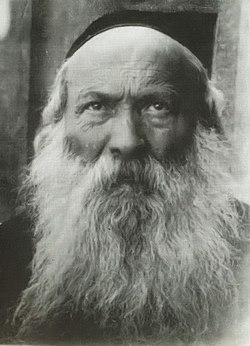
His book Shem MiShmuel is considered a foundational book, and many, from every circle and community, meditate on it at any time.
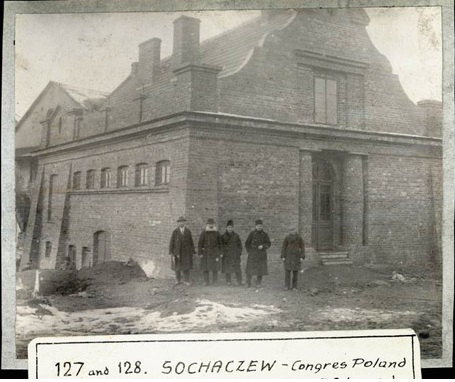
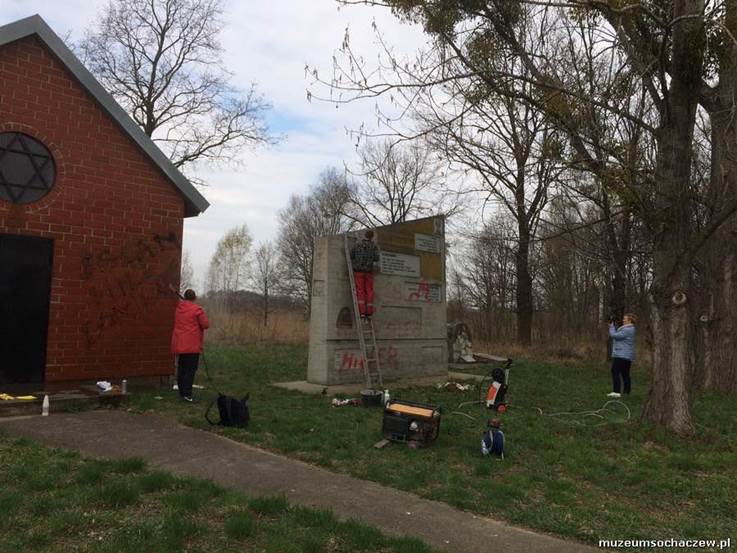
5777 (2015-6), volunteers remove antisemitic graffiti from the cemetery in Sochaczew, Sochczew Museum