The Dowry
A story from Rebbetzin Penina Miller, the wife of Rabbi Pinchas Miller z”l, the first rabbi of Nazareth Illit (today known as Nof HaGalil)
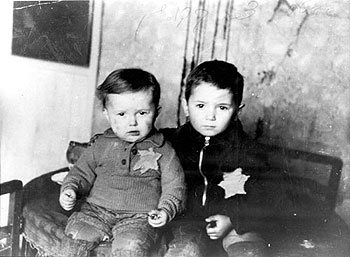
The rabbi and his wife were Holocaust survivors, and the rebbetzin, a talented writer, wrote down emotional events from their life together and published them in a book called “My Rabbi” (in 5747/1987).
This heartbreaking story is being published in honour of the Tisha B’av fast day.
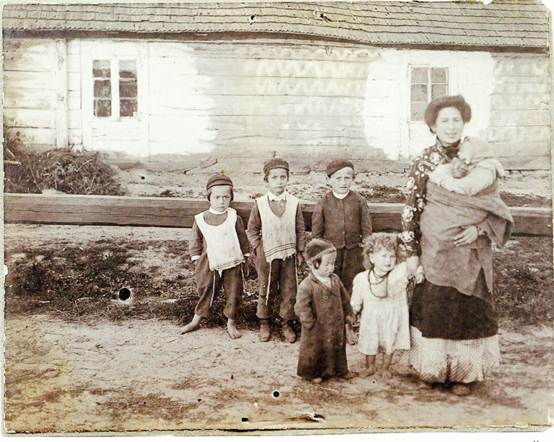
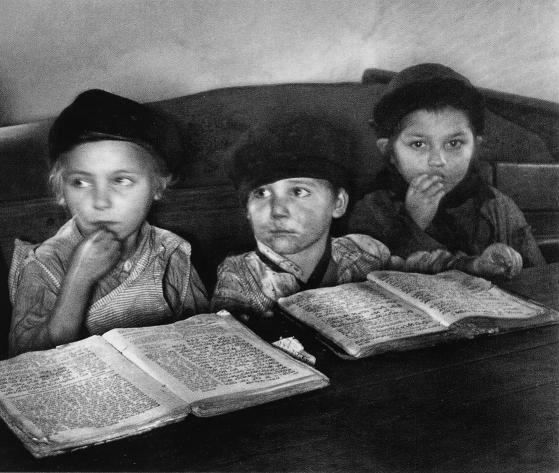
After the Nazis were defeated, the Jewish People added a chapter to the Kinnot (Lamentations) of Tisha B’Av and it became part of the daily routine. The Nazi murderers were scattered throughout the world; but the Jewish People, who established so many organizations in their history, did not organize to avenge the blood shed; they passed this task on to G-d, who is a zealous and avenging G-d…
We have plenty of memorial books. For each and every community that was destroyed; our leaders used the martyrs of the Holocaust as excellent rhetorical material, until the whole subject was worn away and turned into “rusty iron.”
Auschwitz did give birth to the zealous warriors and heroes who fulfilled the vision of the Jewish state, but the younger generation in Israel already sees the Holocaust period as nothing more than a chapter in history.
And we, who pledged over the fresh mass graves to remember, have already forgotten our oath. Our greedy brothers are returning to build houses in their parents’ cemeteries; Diaspora Jews are tied to the meat pot and refuse to make aliya (immigrate to Israel); Israeli tourists scatter bags of dollars among gentiles who hate us utterly; and we, who have clung to the Holy Land, have forgotten that we are embers remaining from the fire and competing with one another for the pleasures of this world.
One Jew, Menashe Bruker, cannot forget, and his heart is burdened with thirty years of pain; the torment has eaten away at his flesh over the years, leaving him with a large red nose and two large, bulging eyes, expressing protest against the indifference of the world. Time has also cruelly carved his face and turned his hair white. All Polish immigrants in our city know this humble man, who walks among us in silence like a living monument to the days of the Holocaust.
Menashe Bruker immigrated to Israel from France about ten years ago and lives in solitude, without a wife, without a family, and without caring about making a living. During the week, he is seen several times in the Holocaust and Heroism Library, leafing through the registers of the destroyed communities, or sitting on a bench in the shade of a tree in the garden by the youth center, lost in thought. On Shabbat, he is at morning prayers in the central synagogue, his lips moving and his eyes wandering into the distance.
A few months ago, Menashe Bruker entered the rabbinate’s office. “Honoured Rabbi,” he began, “I am in distress because of the kindergarten next to my apartment.”
“That is, the children are bothering you?” my husband responded.
“On the contrary, Your Honour, if there is no kindergarten near my apartment, then it is not good for me.” My husband did not understand the problem. Because of the emotion, poor Menashe could not open his mouth. Only after looking into the rabbi’s eyes for a long second did he begin his story:
“I was born in Poland, I was a resident of the city of Bialystok, I worked as a tailor for clothes and managed to make a living. G-d blessed me with a wonderful wife and seven children – five girls and two boys – all healthy and lovely as roses. In the fall of 1939 I was invited to the wedding of my niece, who lived in Paris.”
“I went to the wedding and on the wedding night war, broke out between Germany and Poland. I could not return home. I remained stranded in France. During the German occupation, my niece purchased forged documents for me in the name of an Austrian gentile and with them I fled to the city of Vichy.”
“At the end of the war, I visited Bialystok – and not only did I not find my family – but the house I lived in had disappeared from the world. My brother and his daughter from Paris also perished in sanctification of the Name of G-d in the extermination camp. Of all my family, my brother and sister, only I remained alive. I returned to France and worked for twenty years in a textile factory until I retired and made aliya to Israel.”
“And why didn’t you try to recuperate after the war? Why didn’t you get married like others did?” my husband asked. “Your Honour,” replied Menashe, “I could not possibly accept reality. I always lived in the hope that my wife and children were not killed. I said to myself: It is impossible for there to be such a cruel murderer who would not have mercy on seven nice and sweet souls like my children… my children with their golden hair. Their blue eyes were as beautiful as dolls in a shop window… Even the devil himself would not touch them with evil… It seemed to me that by remarrying I would close the scroll on their graves.”
Menashe Bruker wiped the sweat from his face and continued:
“Honourable Rabbi, despite the many years that have passed, the images of my good and beautiful wife and my dear children always float before my eyes and I see them as I did when I left them… The last thing I kissed before I set off was the baby in the cradle… As I said, I see them, but I don’t hear them. Therefore, when I arrived in the Galilee, I asked ‘Amidar’ (a subsidized housing organization) for an apartment near the kindergarten. Here I felt as if I could hear my children and that calmed me down, but now they have moved the kindergarten to another street, and without a kindergarten – Honourable Rabbi – I am unable to endure and cannot bear this life.”
Menashe Bruker fell silent, then jumped up from his seat, raised his hands to the sky, and screamed with a tremor of rage:
“I ask myself day and night, what are my sins and what is my crime that fate has condemned me to life?…”
The education department at the municipality explained to my husband that for budgetary reasons, in order to save money, two kindergartens were merged into one, since young parents had moved to the southern neighborhoods and there were few children left here.
My rabbi contacted the director of “Amidar” and promised him “the World to Come” if he could find an empty apartment near some kindergarten in the city. After extensive searching, my husband’s eyes lit up with joy when a suitable apartment was found near an elementary school. But Menashe Bruker rejected the offer with disgust:
“Older children, running around like little horses, make a terrible noise and I get a headache from it. There is a huge difference: the murmuring of babies and the chattering of toddlers are similar to the chirping of birds in spring, to the sounds of the Levites’ musical instruments in the Temple, to the singing of the ministering angels… which gladden the heart and perfume the soul… Honourable Rabbi, my study in my house in Bialystok was next to my children’s room, and while I worked, I heard the breath of the babies’ mouths, my soul thirsted for this music!”
On Shabbat, my husband saw Menashe in the synagogue, broken and depressed, biting his nails and with signs of despair in his eyes. It was a black Shabbat in our house.
The next day, my rabbi went out to the southern neighborhoods and toured several blocks in the Sapir neighborhood. In one of the apartments he found an important woman, who had been widowed by her husband several years ago. All her family members perished in the Holocaust and she was left alone, poor and wretched.
Not two weeks passed before a wedding ceremony was held at the rabbinate; Menashe Bruker married the widow, who had only one dowry: a kindergarten near her apartment.
5742 (1982)
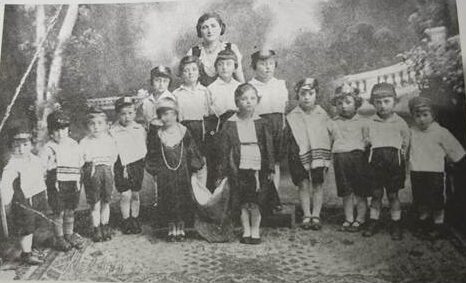
A Jewish kindergarten in the interwar period