The Tehran Children No Longer Blame
Presented by Faigy Schiff
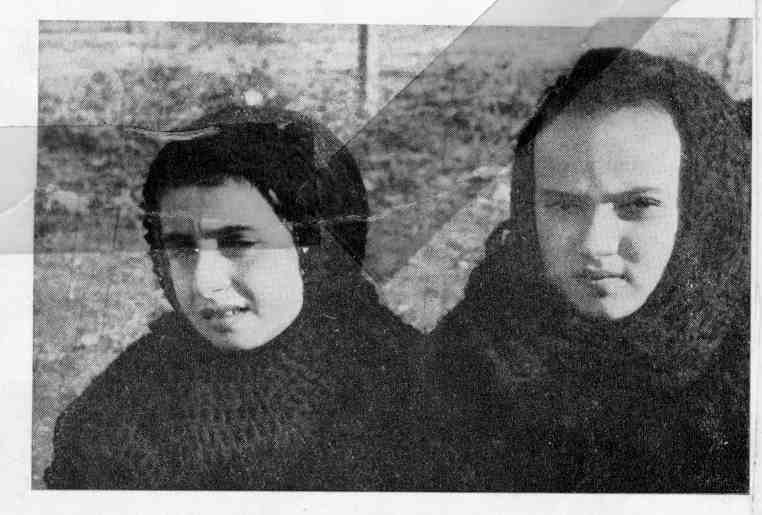
The Tehran Children no longer blame, either because they are no longer children, or because many of them are no longer alive. But those descendants and descendants of descendants who could have grown up observing Torah and mitzvahs (commandments), and were not blessed with this because of arbitrary decisions or secular ambition – their mutilated spirituality will continue to blame forever.
On the eve of Purim 1943, the Tehran Children arrived in Israel. They began their journey in Poland, where they were born. From there they moved to Russia, and after their parents decided not to become naturalized, they were deported to Uzbekistan in Siberia. The Polish government-in-exile, concerned for its citizens, opened institutions for the children of the exilees. Jewish children were not included in this initiative, but several hundred of them managed to enter these orphanages under Christian guise or in some other way.
The institutions were moved to Tehran in Persia, and from there the spiritual journey began, when the (secular) Zionist Agency entered the picture and gathered the Jewish children. Henrietta Szold and all the guides brought in to run the place had no religious affiliation and drew the children, many of them from ultra-Orthodox and religious families, into a life without prayer, head coverings, Sabbaths and holidays. Even then, the trials were numerous, as the children themselves attest. The children’s physical journey continued with a boat to India, due to the inability to reach the country directly, from there to Egypt and from Egypt by train to the Land of Israel.
They were welcomed with open arms as “sons returned to their land,” but the struggle for their spirituality soon began, with a clash between the secular parties, the Jewish Agency, the Mizrachi, and the ultra-Orthodox Agudath Israel. Many of the children abandoned their religion following the temptations offered to them by secular institutions, but there were also those who fought for their right to continue the tradition of their fathers.
This article does not seek to cover the subject from all sides, but merely to present a collection of testimonies and newspaper clippings that tell the story of these children. The Ganzach Kiddush Hashem archive contains a large repository of testimonies, writings, and books on the subject, and those wishing to delve deeper are invited to peruse them.
Yehuda Laks’s mother placed a cross around his neck and asked him to go to the orphanage, not before assuring him that when he reached safety, he would return to his Judaism.
(HaTzofeh 1993, Shulamit Langbaum)
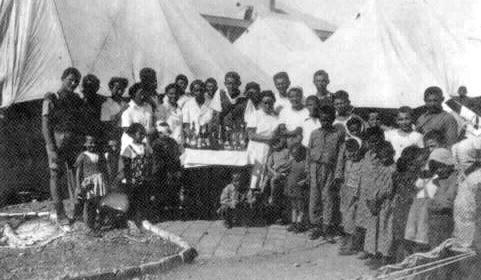
In the tent camp in Tehran
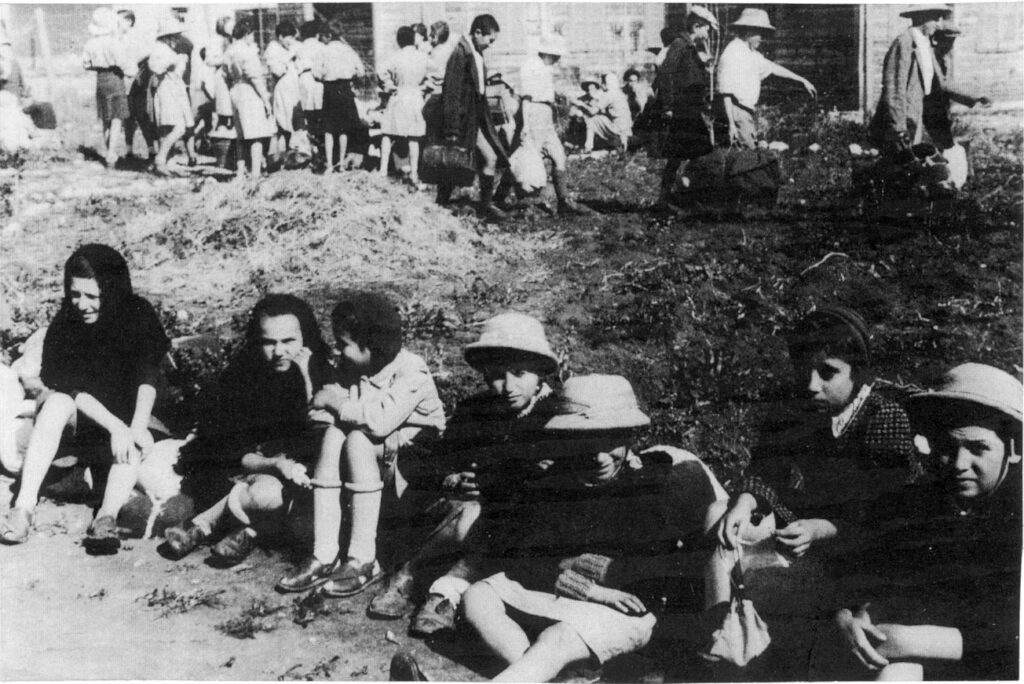
In Tehran
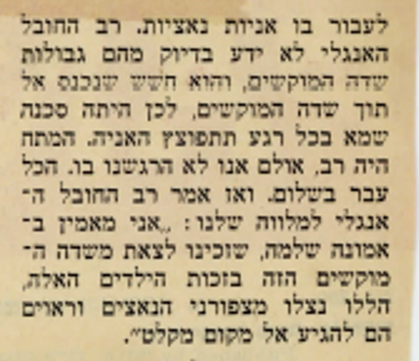
“I believe with complete faith that we were able to get out of this minefield thanks to these children. Those who were saved from the clutches of the Nazis and deserve to reach a place of refuge.” These were the words of the English captain after sailing through an ocean infested with German mines.
(Esther Bar Yesha interviews Mr. Moshe Finkelstein, deputy principal of Shaffir Regional School, School Newspaper 1966)
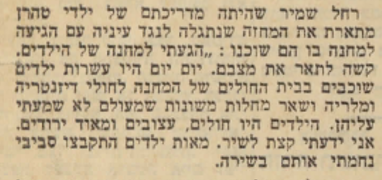
Rachel Shamir, one of the counsellors, mentions the ill health in Tehran of dozens of children sick with dysentery and malaria and how other children gathered around them to sing and cheer them up
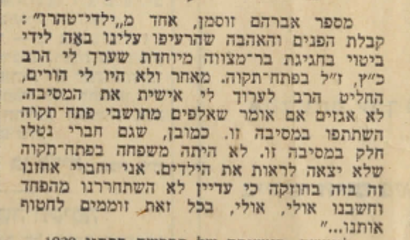
Avraham Sussman, one of the Tehran Children, tells about a bar mitzvah that Rabbi Katz of Petach Tikva personally made for him, with all of the Petach Tikva community participating
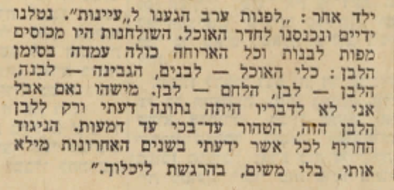
Another child tells of all the foods he finally got to enjoy in the Land of Israel after the spicy foods he ate in the previous years
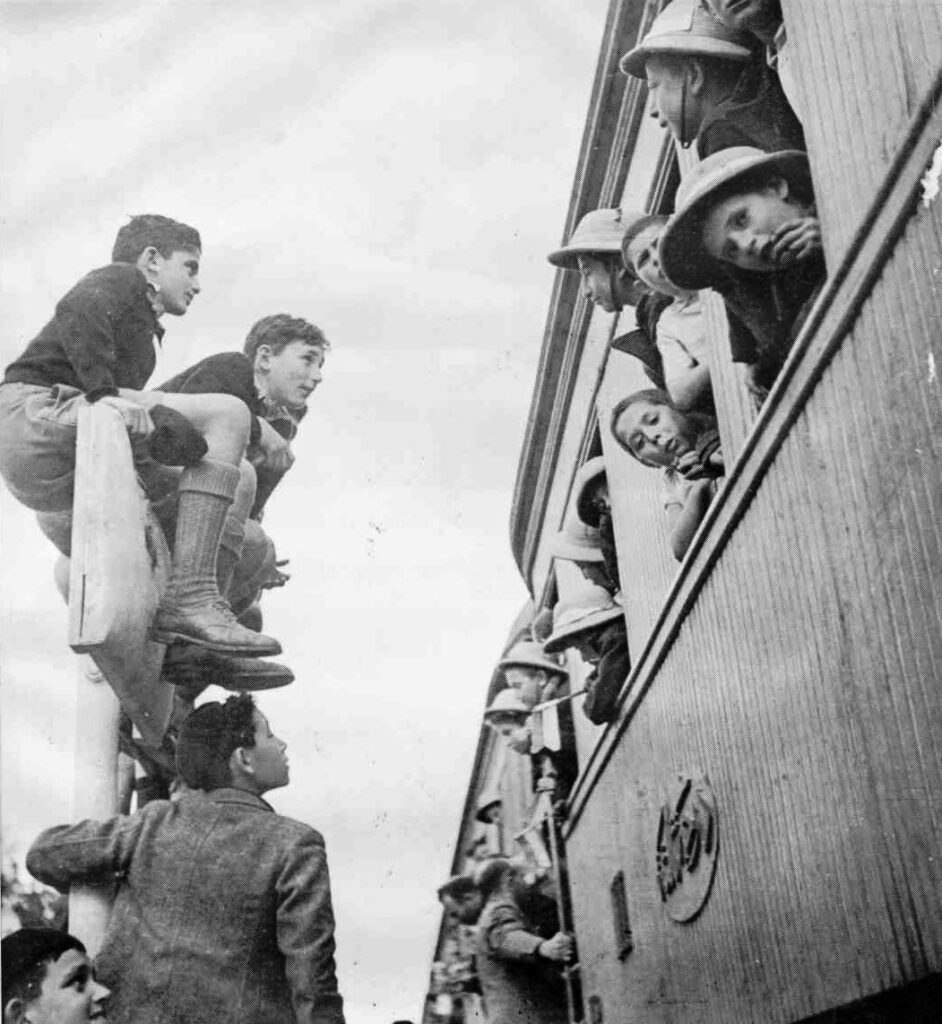
The reception in the Land of Israel
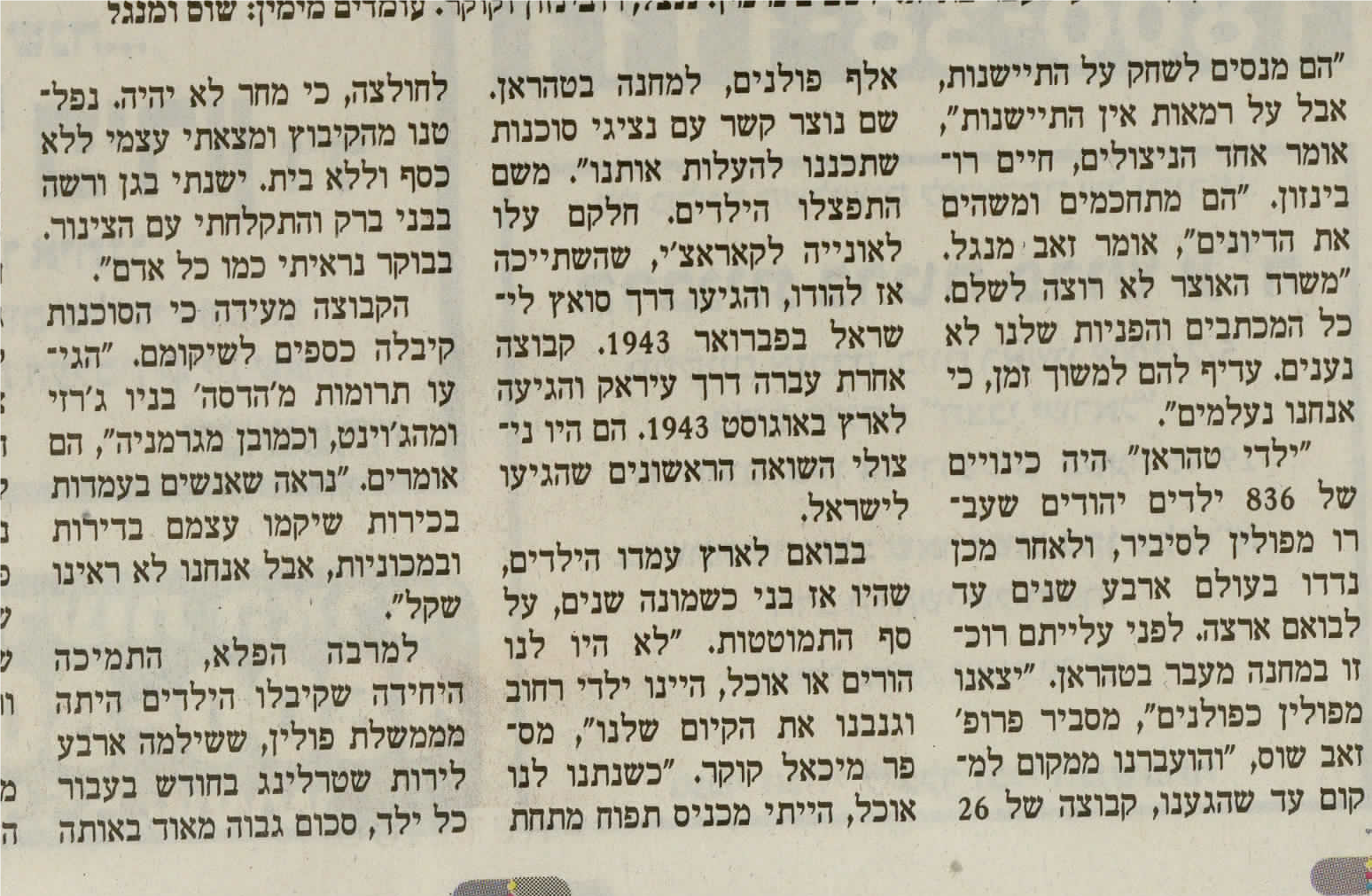
“We had no parents or food, we were street children and we stole for our existence,” said Professor Ze’ev Schuss. “When they gave us food, I would put an apple under my shirt because there would be none tomorrow.” (Haaretz 2009)
The children were scattered among various institutions. The 14-year-olds chose their own educational institutions. As for the younger ones, Henrietta Szold interviewed each child, and when it turned out that they remembered lighting candles at home, she turned him to religious education. (HaTzofeh)

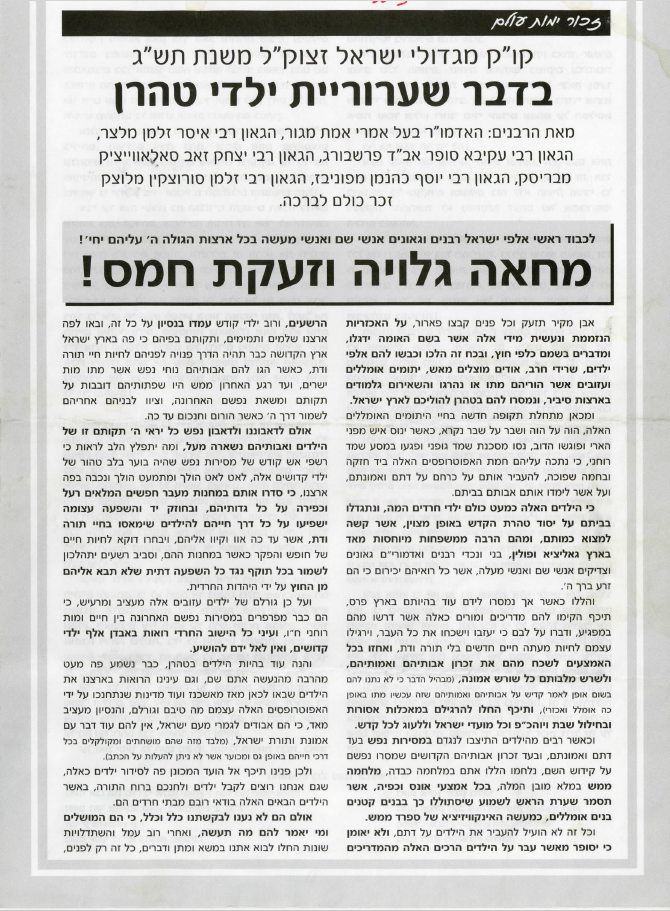
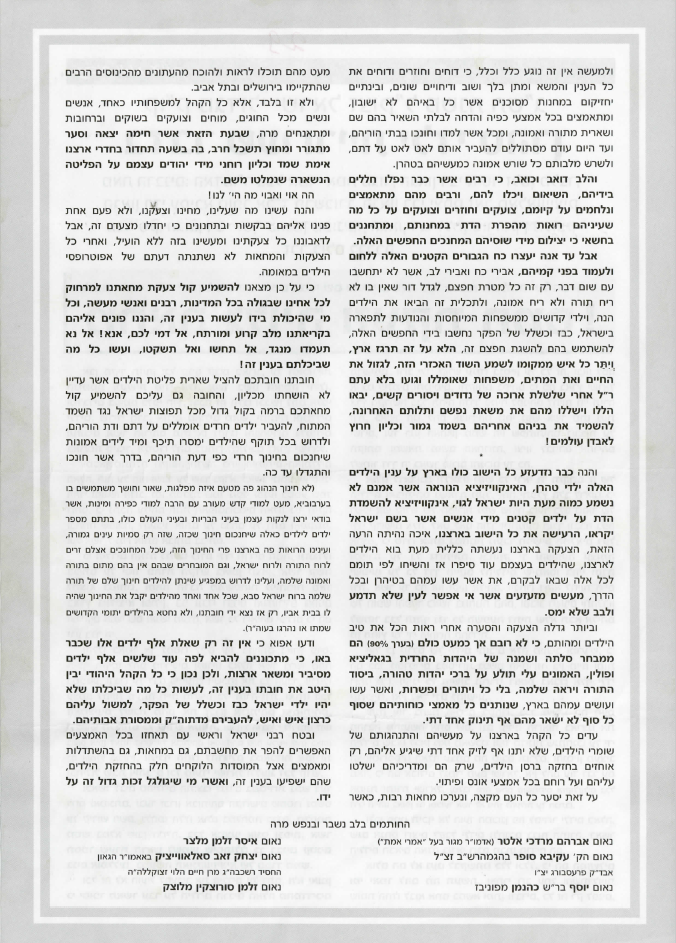
In 5703 (1943), the great Jewish men gathered to fight for the souls of the children and drafted a proclamation boycotting the Jewish Agency. Rabbi Yisrael Grossman z”l tells of a special mission sent by the Brisker Rebbe to ensure that the Gerrer Rebbe signed the rabbinical proclamation. (Interview with the Rabbi, 5770/2009-10)
The journey of the Tehran Children lasted four years. The spiritual journey accompanied and will accompany them and their descendants, like every Jew, forever.
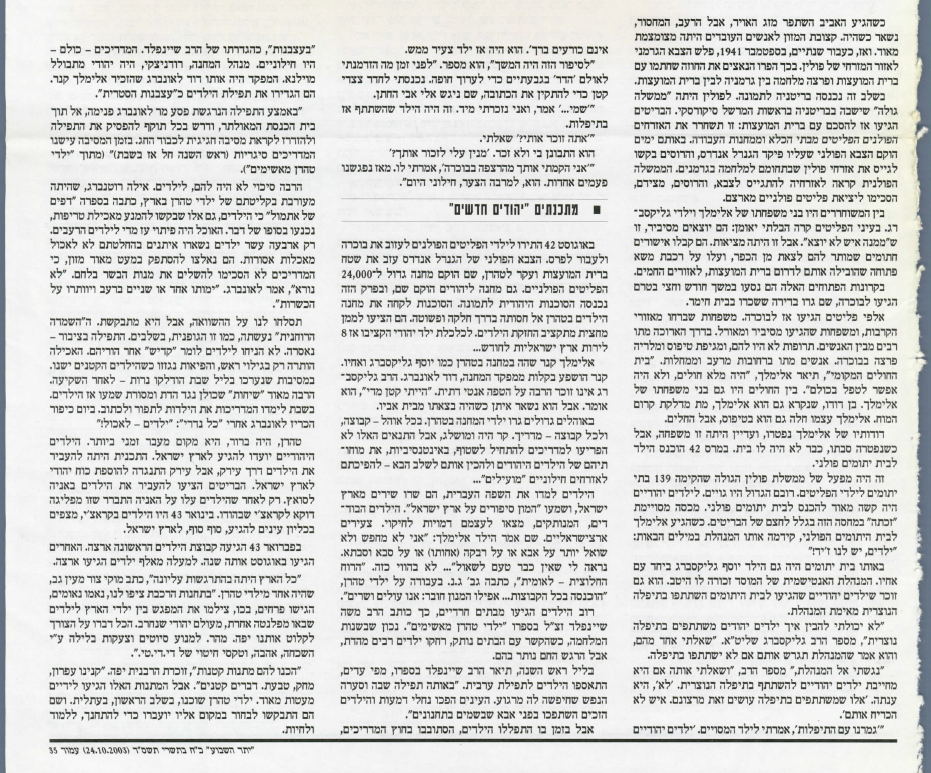
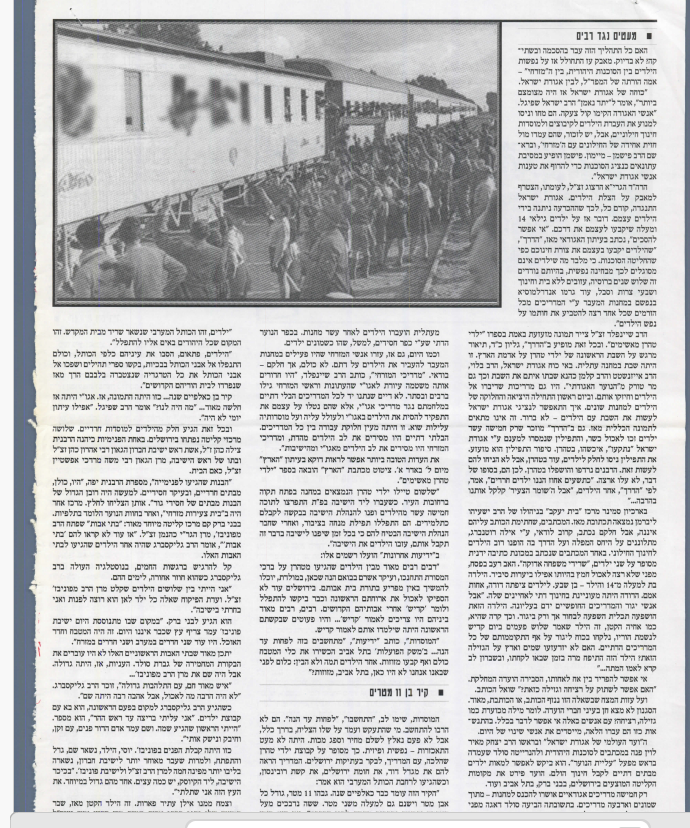
On a walk through the streets of Petach Tikva, the children passed by the yeshiva. Fifteen of them burst into it and demanded to be admitted immediately. (Menucha Chevroni, Yated HaShavua 5764/2003-4)

Rabbi Pinchas Schreiber was almost caught in a net, but managed to escape from the farm headed by Rachel Yanait and tried to save his friend as well. (Asher Medina, Kolot 5767/2006-7)
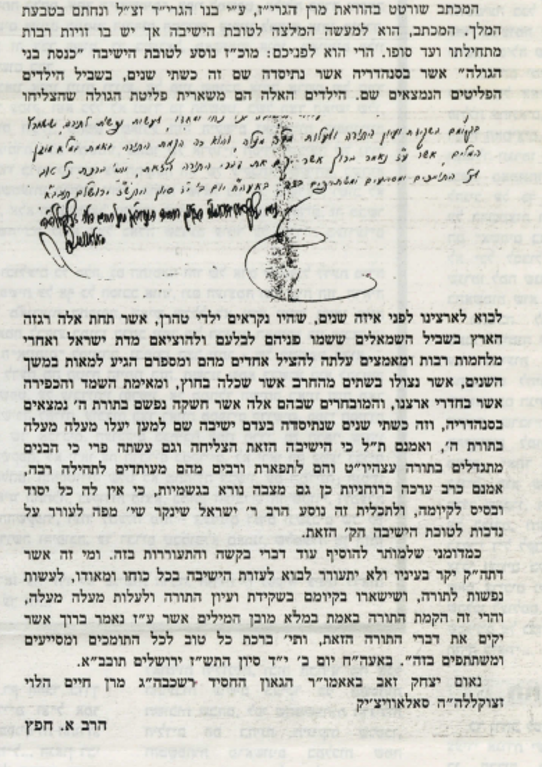
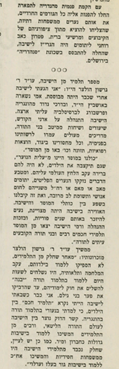
The Sanhedria Yeshiva in Jerusalem accepted children from Tehran, where they were educated in the way of their ancestors. A letter written by the Brisker Rebbe, for the benefit of the yeshiva also tells the story of the children. (A. Yosefson, Yated Ne’eman)