Presented by: Faigy Schiff
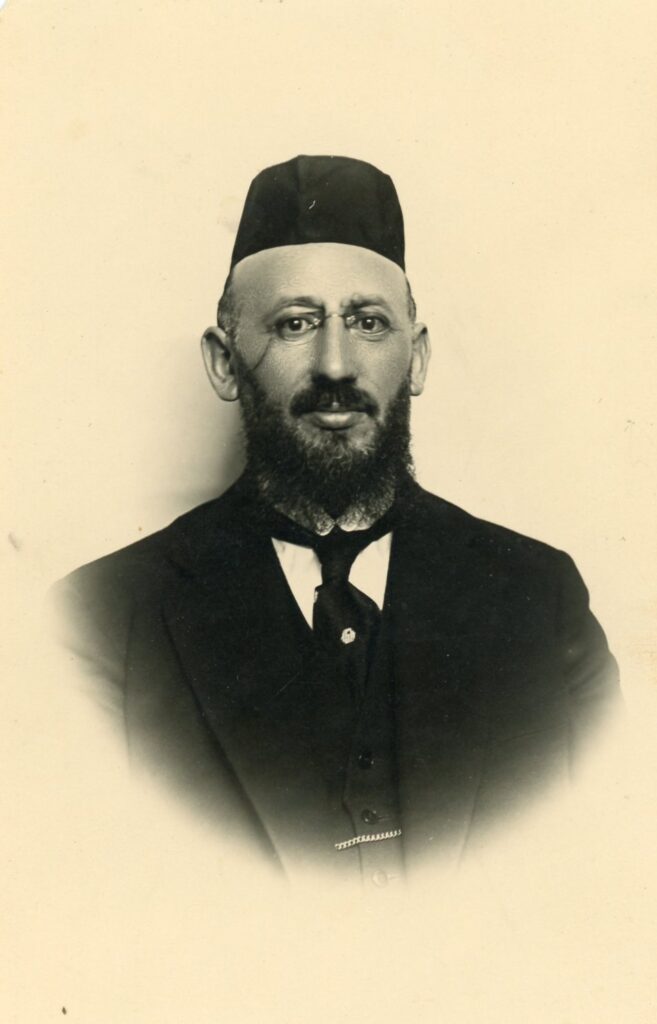
We recently came across an interesting document in the collection of Rabbi Yerachmiel Eliyahu Bochko z”l, the head of the Eitz Chaim yeshiva in Montreux, Switzerland, who worked together with his wife on behalf of Holocaust survivors who came to Lausanne and other places in Switzerland to recover. The document – a letter from the girl Rachel Friedman – touches on one of the most difficult tragedies of the Holocaust for our people: the loss of “living Torah scrolls.”
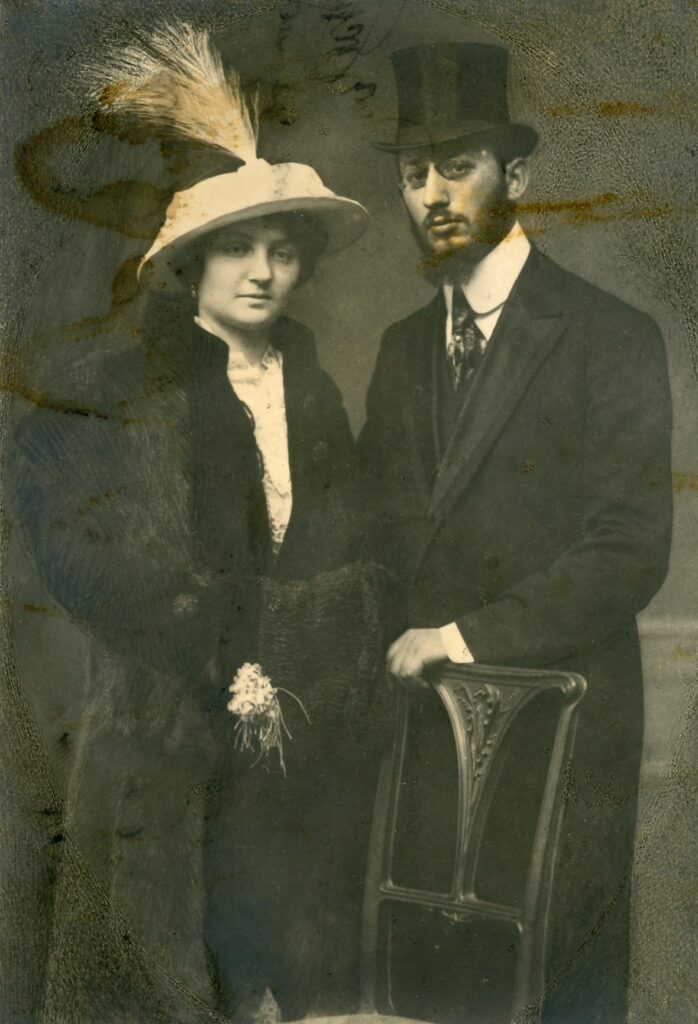
The rabbi and rebbetzin when they were young
The Letter
At the end of the war, a girl named Rachel Friedman arrived at a sanatorium in Switzerland with a group of fifty-five people.
In 1945, she sent a letter to Rabbi Buchko. The letter is a copy, typed in German on a typewriter, and of poor quality, with some of the words very blurry.
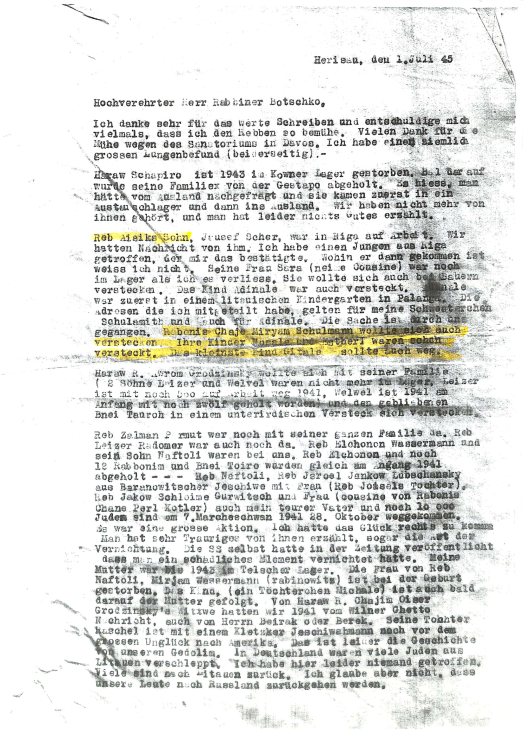
Another document in the collection, by Rebbetzin Hannah Pearl Kotler, wife of Rabbi Aharon Kotler z”l, gives us Rachel’s details: it contains a request to help the girl Rachel Friedman, daughter of Rabbi Malkiel Friedman.
In Rachel’s letter, which apparently constitutes an answer to Rabbi Buchko’s questions, Rachel describes the stories of the rabbis of Lithuania and their families as she knows them.
Among other things, she mentions the great rabbis, may G-d avenge theri blood: her father, Rabbi Malkiel Aryeh Friedman; Rabbi Elchanan Wasserman, Rabbi Isaac Shor; Rabbi Avraham Grodzinski; Rabbi Zalman Primot; Rabbi Yisrael Yaakov Lubchansky; Rebbetzin Chaya Miriam Shulman, and more. She also tells about her hidden sisters, Shulamit and Adinalah – and apparently following on from a previous letter that is no longer in our possession, she writes: “The address I gave is valid for my sisters, for my sister Shulamit and also for Adinaleh.”
She writes about the group of rabbis: “It was a big aktion (roundup)… People told very sad things about them, even about the way of extermination…”
Rabbi Buchko
Rabbi Buchko was born in Chorzele on Tu B’Shvat 5648 (1888). At the age of 12, he was sent to the Lomza yeshiva, and after a short time, moved to the Novardok yeshiva to the “Alter of Novardok,” Rabbi Yosef Horowitz z”l, for 11 years. During this time, he also taught at the Torah V’Daat yeshiva in Novardok, headed by the city’s rabbi, Rabbi Menachem Krakowski z”l. He was orphaned by his parents in his youth. At the age of 23, he married Rivka Sternbuch. They moved to Basel for a short period, and from there to Montreux in Switzerland.
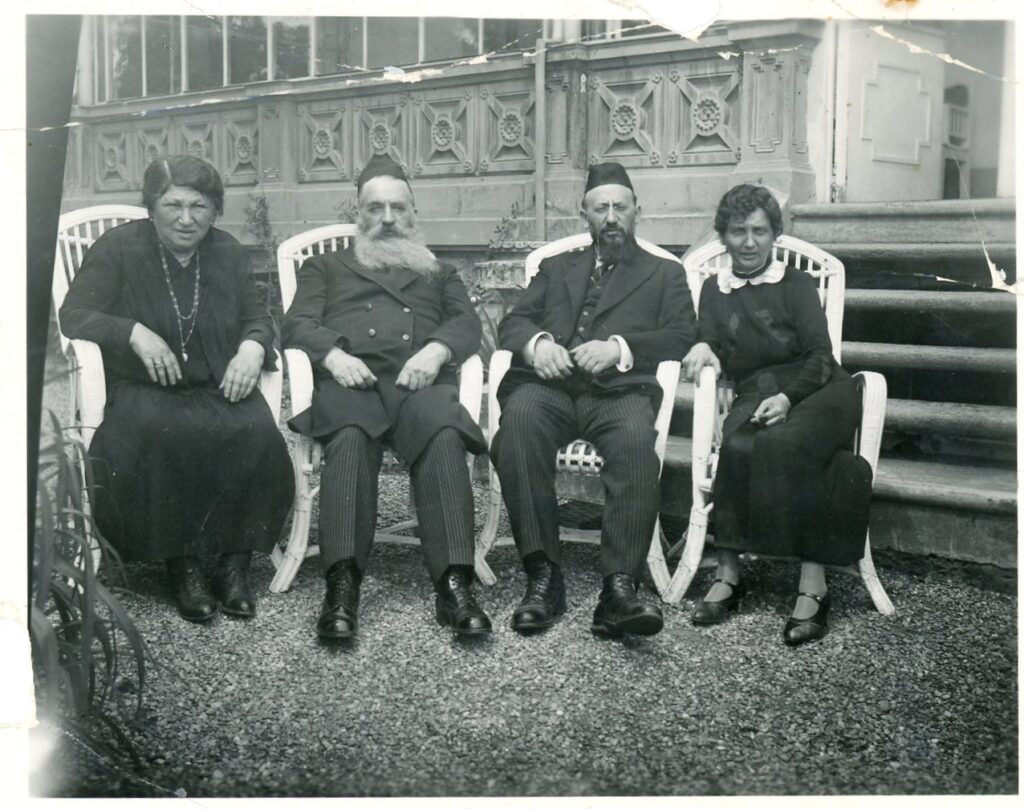
The rabbi and rebbetzin with her parents, Rabbi and Rebbetzin Sternbuch
In Iyar 5687 (1927), he founded the Eitz Chaim yeshiva in Montreux (now called the Heichal Eliyahu yeshiva, named after him). He did not want to make a living from Torah, so his wife engaged in commerce.
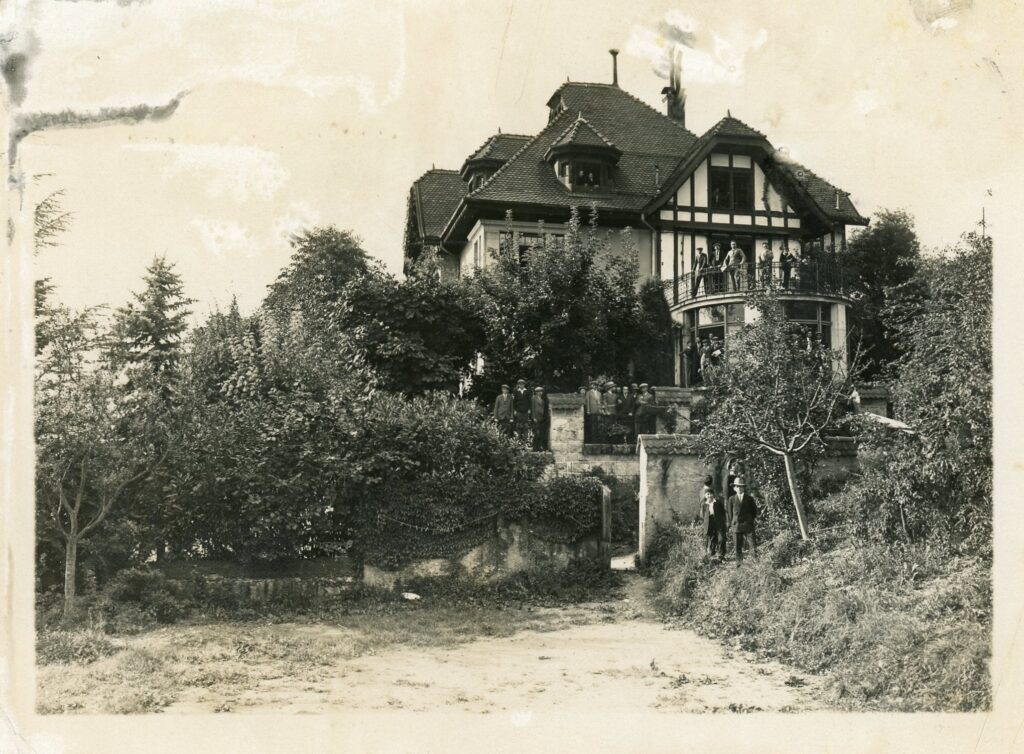
The Eitz Chaim yeshiva building in Montreux, Switzerland
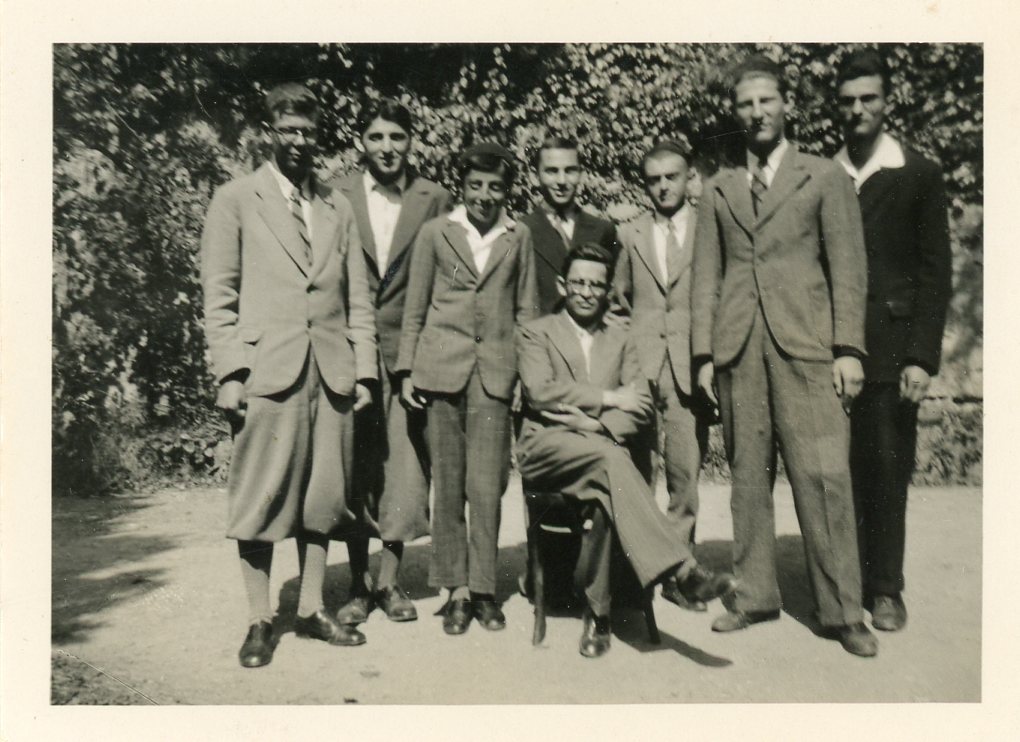
During the Holocaust, he worked to save Jews, and after the Holocaust, he continued his activities for the survivors. He was a member of Agudath Israel. He died on the 28th of Tevet 5716 (1956) of a heart attack on his way to a conference in the United States. His coffin was taken to Jerusalem to the Sanhedria Cemetery.
Eulogies Written after his Passing:
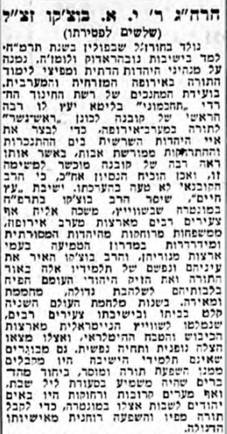
Rabbi Yifrach, HaBoker, 1956, courtesy of the National Library
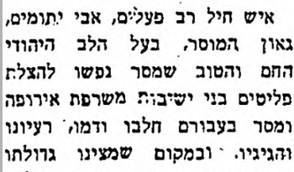
Rabbi Yifrach, Shearim 1957, courtesy of the National Library
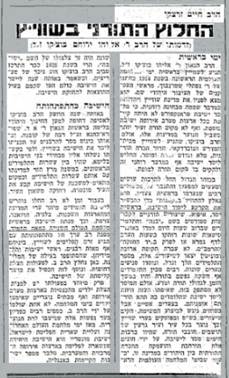
Rabbi Chaim Zaritzky, HaTzofeh, 1956, courtesy of the National Library