One day, a pair of tzitzit (ritual fringes) arrived at Ganzach Kiddush Hashem, which, judging by its size, appeared to have belonged to a young, small boy. The tzitzit came from Europe and survived the Holocaust. It was worn by a Jewish boy who jumped from a train and miraculously survived.
The shape of the tallit is quite strange. It appears to have been hastily sewn from a colourful garment that was perhaps intended for a small boy or a woman. This garment was torn, unraveled, and sewn again: it was cut into four sections, tiny tassels were tied to it, and thus it went through all the experiences with the chassidic Jewish boy until he reached the Holy Land.
This tzitzit is one item from a particularly moving collection recently received by Ganzach Kiddush Hashem, from the estate of the Holocaust survivor Aryeh Lieberman z”l.
Aryeh Leibish, a native of one of the villages in the Munkács region (Duszína) brought the tzitzit with him to the Land of Israel, and his grandson, an important kollel avrech (young man studying in a yeshiva for married students) who was honorued to establish a house of Torah and piety, had it in his heart that the garment for which his ancestors were willing to give their lives, would benefit many within the framework of the holy educational activities of Ganzach Kiddush Hashem.
These tzitzit are not in the same shape as any other tzitzit. Ganzach Kiddush Hashem’s photo database contains photos of tzitzit from all generations and all places, but nowhere and at no time were four parts sewn like this. It is a garment of devotion that a loving mother quickly sewed to the dimensions of a child who was forced to flee. It was a colorful belt that was converted into tzitzit so that the child would have protection. He managed to jump from the train that was racing to the final station, and with the tzitzit on his body he managed to reach the forest. In the forests of Marmarosh he joined the partisans and thus survived until liberation.
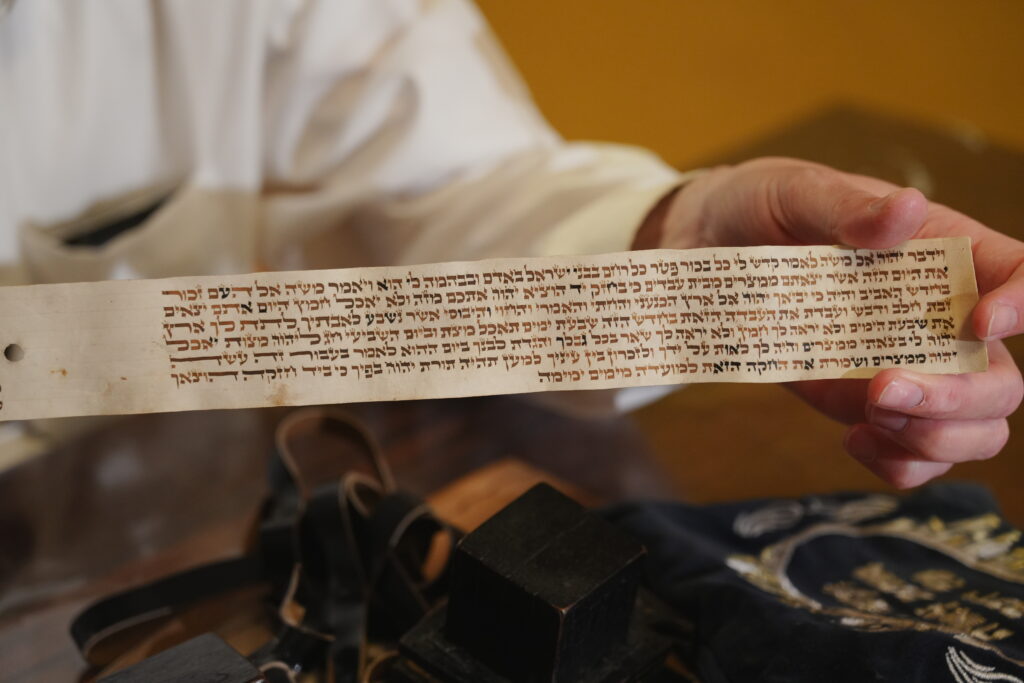
Another, valuable item that came to the archive, from the same estate, is the tefillin (phylacteries).
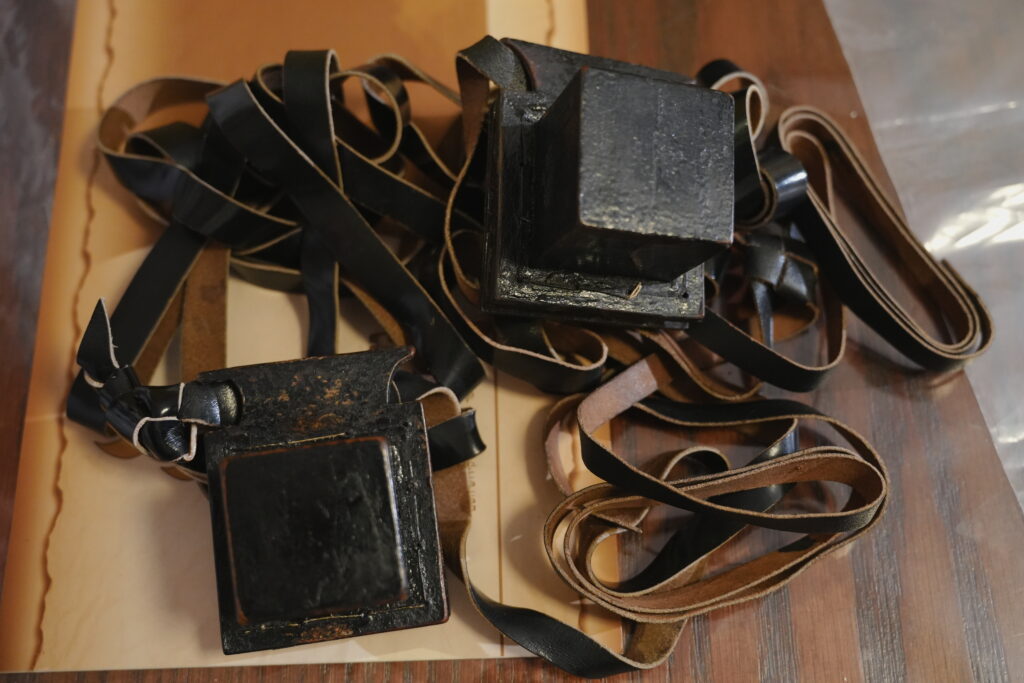
When the boy, Aryeh Leib, jumped off the train, he still had the tefillin with him, but he quickly realized that he could not take this treasure with him into the forest. The ancient tefillin were then 200 years old, larger than many of the tefillin we are used to today.
The boy was faced with fateful decisions. He knew that he could not escape with the tefillin, and after all, it is written in the Torah “And live by them (the commandments)!” The murderers lurked in every corner and Jewish blood was spilled like water. With a heavy heart, he was forced to say goodbye to them and hid them in a synagogue in a nearby village, and so he escaped into the forest, only his skin on his body, covered with a light garment and wearing the tiny tzitzit that his mother had sewn for him out of love and prayer.
The war ended, and the boy survived. He remembered the name of the village where he had hidden the tefillin and was drawn to the treasure he had hidden there like thirst for water. He arrived at the synagogue and found the tefillin where he had hidden them.
After that, the boy hurried back home. He raced along a dirt road toward the village where he had grown up, and discovered that nothing of all that was good and familiar to him had survived. The house was in the hands of strangers and the good characters, the characters of the children who had filled him with warmth and love during all the difficult years, were no longer there. They reside in a world that is all good under the wings of the Divine Presence.
He quietly knocked on the door of his house. A familiar and beloved wooden door, and a fat and clumsy gentile opened it. A gentile who had robbed his house and all its contents. The gentile claimed that the house had nothing left of what its previous owners had left. “I bought an empty house and please don’t come here anymore, it’s bothersome!”
And suddenly, in the heat of the argument, the young man noticed their Chanukah menorah, a menorah made of pure silver with which his father had lit the Chanukah candles all these years.
He asked for the menorah, but the “owner” had no intention of giving up the precious item. The young man burst into tears and offered the gentile to sell him the menorah for any amount he wanted.
After difficult negotiations, he purchased the menorah and was able to travel with it to the Land of Israel.
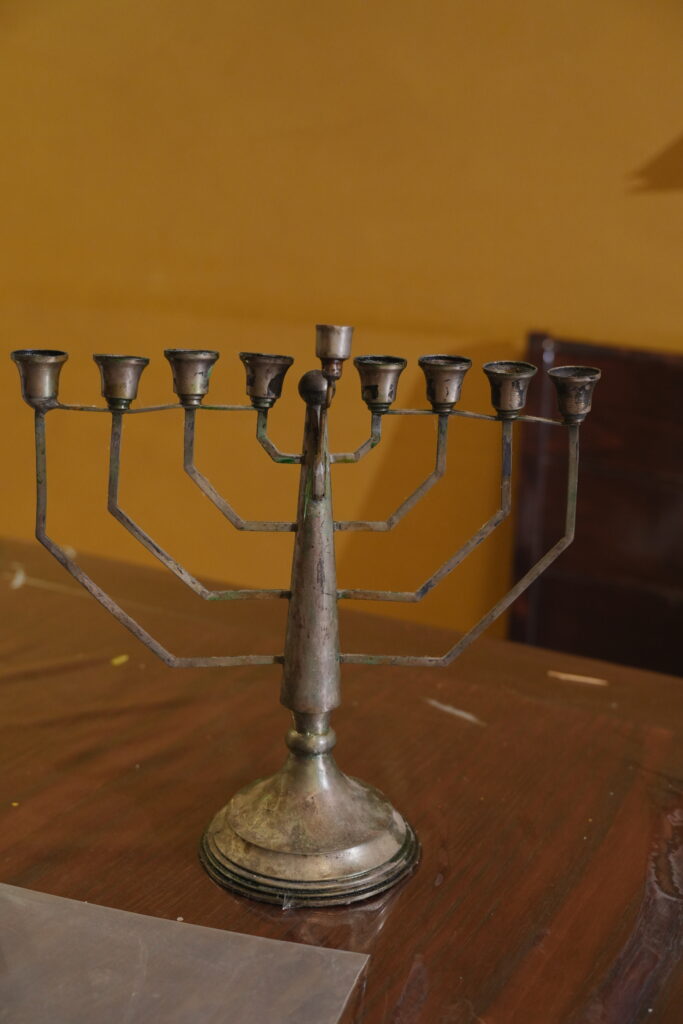
The menorah is now housed in the home of the grandson, Rabbi Amir Lieberman, a talmid chacham (Torah scholar) in Hadera, and he uses it to light the Chanukah candles every year.
The tzitzit and tefillin are now at Ganzach Kiddush Hashem and will be presented to visitors, male and female students, from all groups and backgroundss, who will look at the artifacts and reflect on the meaning inherent in them.
Tefillin that were written 250 years ago, went through pogroms and wars, went through the terrible Holocaust, and here they are, in the Land of Israel, here they are before us, a sign and testimony that the people of Israel are alive and that “any weapon whetted against you shall not succeed” (Isaiah 54:17).